Why Vaccine Hesitancy Is Unlikely to Go Away
August 9, 2026 - 12:46

Public health officials have long hoped that better education and clearer messaging would eventually erode vaccine hesitancy. But new research suggests the problem runs deeper than misinformation or political divides. The reluctance may be wired into how our brains naturally process the idea of contamination, making it a stubborn feature of human psychology rather than a temporary fixable glitch.
The thinking goes like this. Humans evolved to avoid things that look dirty, spoiled, or foreign. That instinct kept our ancestors safe from spoiled meat or contaminated water. But the same cognitive machinery now reacts to vaccines, which are designed to introduce a harmless piece of a pathogen into the body. On a subconscious level, that act can trigger the same disgust and avoidance responses as touching something rotten. Even when a person knows rationally that a vaccine is safe, the gut feeling says otherwise.
This is not just about a few anxious people. The research points to a broad spectrum of natural cognitive dispositions that make all of us, to some degree, uneasy with the idea of injecting foreign material into our own flesh. Some people override that unease with trust in science or personal experience. Others, especially when they feel pressured or rushed, lean into the instinct and refuse.
The implication is uncomfortable for health campaigns. If vaccine hesitancy is partly a hardwired response, then simply repeating facts or debunking myths will never fully eliminate it. It can be managed, reduced, or redirected, but it will not disappear. That means public health strategies need to shift from expecting total acceptance to designing for persistent resistance, offering more time, more choice, and more honest discussion about the discomfort people feel. The goal may not be to win everyone over, but to make space for the doubt that will always be there.
MORE NEWS

September 23, 2026 - 02:26
Why Interruptions Feel Like a Personal AttackUnexpected interruptions, even if brief, can severely disrupt an individual`s thought process and workflow. Studies demonstrate that even momentary distractions can lead to increased mistakes and...

September 22, 2026 - 04:03
Psychology says people who struggle to confront others may be running a powerful risk calculationAvoiding a confrontation can be the safest and most sensible choice when a situation feels threatening. The pattern becomes more psychologically meaningful when someone consistently struggles to...
September 21, 2026 - 13:23
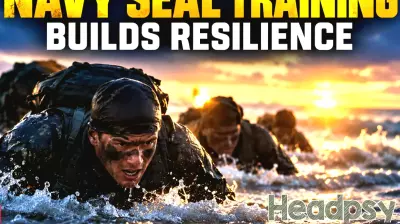
How Navy SEAL Training Shows Resilience Can Be Built, Not Just BornUS Navy SEAL training reveals that resilience is not an innate quality people either have or lack. Instead, it can develop over time. Psychological traits like hardiness and grit adapt during...

September 20, 2026 - 23:18
Understanding Chronic Traumatic Encephalopathy and Its Warning SignsChronic traumatic encephalopathy, commonly known as CTE, has become a growing concern in the world of contact sports and beyond. Once considered a rare condition, research now suggests it may be...