The Impact of Mirror Neurons on Social Behavior
30 December 2025
Let’s be real here — humans are social animals. From birth, we’re wired to connect, communicate, and empathize with others. But have you ever wondered how we actually do that? What’s going on in our brains that makes us smile when someone smiles, cry during a movie, or flinch when we see someone stub their toe?
Say hello to your brain’s silent MVPs: mirror neurons.
These little neural powerhouses work behind the scenes, shaping our social behavior in ways we don’t even notice — from how we learn to how we feel other people’s pain. In this deep dive, we’re going to break it all down. No fluff. Just straight-up mind science with a human twist.
What Are Mirror Neurons, Anyway?
Alright, let’s start at square one.Mirror neurons are special brain cells that fire both when we perform an action and when we observe someone else doing the same action. Imagine watching someone drink coffee — boom — your mirror neurons light up as if you were sipping that hot brew yourself.
These neurons were first discovered in the 1990s by a team of neuroscientists led by Giacomo Rizzolatti. While studying macaque monkeys (yep, our distant cousins), researchers noticed that specific neurons in the monkeys’ brains activated not only when the monkey grabbed a peanut but also when it watched a human grab it.
Talk about monkey see, monkey do — literally.
Why Do Mirror Neurons Matter?
You might be thinking, “Cool science, but how’s that relevant to me?” Great question.Mirror neurons are believed to play a huge role in social cognition. That’s just a fancy way of saying "how we understand and interact with others." These cells help us:
- Recognize emotions
- Understand intentions
- Develop empathy
- Learn through imitation
- Connect socially
Basically, mirror neurons are like the brain’s built-in Wi-Fi — constantly syncing us up with the emotional and physical states of those around us.
Empathy: The Superpower of Mirror Neurons
Let’s talk about empathy — that warm, fuzzy (or sometimes gut-wrenching) feeling you get when you relate to someone else’s experience.Mirror neurons are thought to be the neurological basis for empathy. When someone around you is hurt, sad, or angry, your mirror neurons start mimicking their emotional state. It’s almost like a mirror. You reflect what you see — emotionally and physically.
Ever cried during a sad movie even though you knew it was fiction? Yep, that’s your mirror neurons fooling your brain into feeling the sadness portrayed on screen. It’s not just sympathy — it’s full-blown emotional simulation.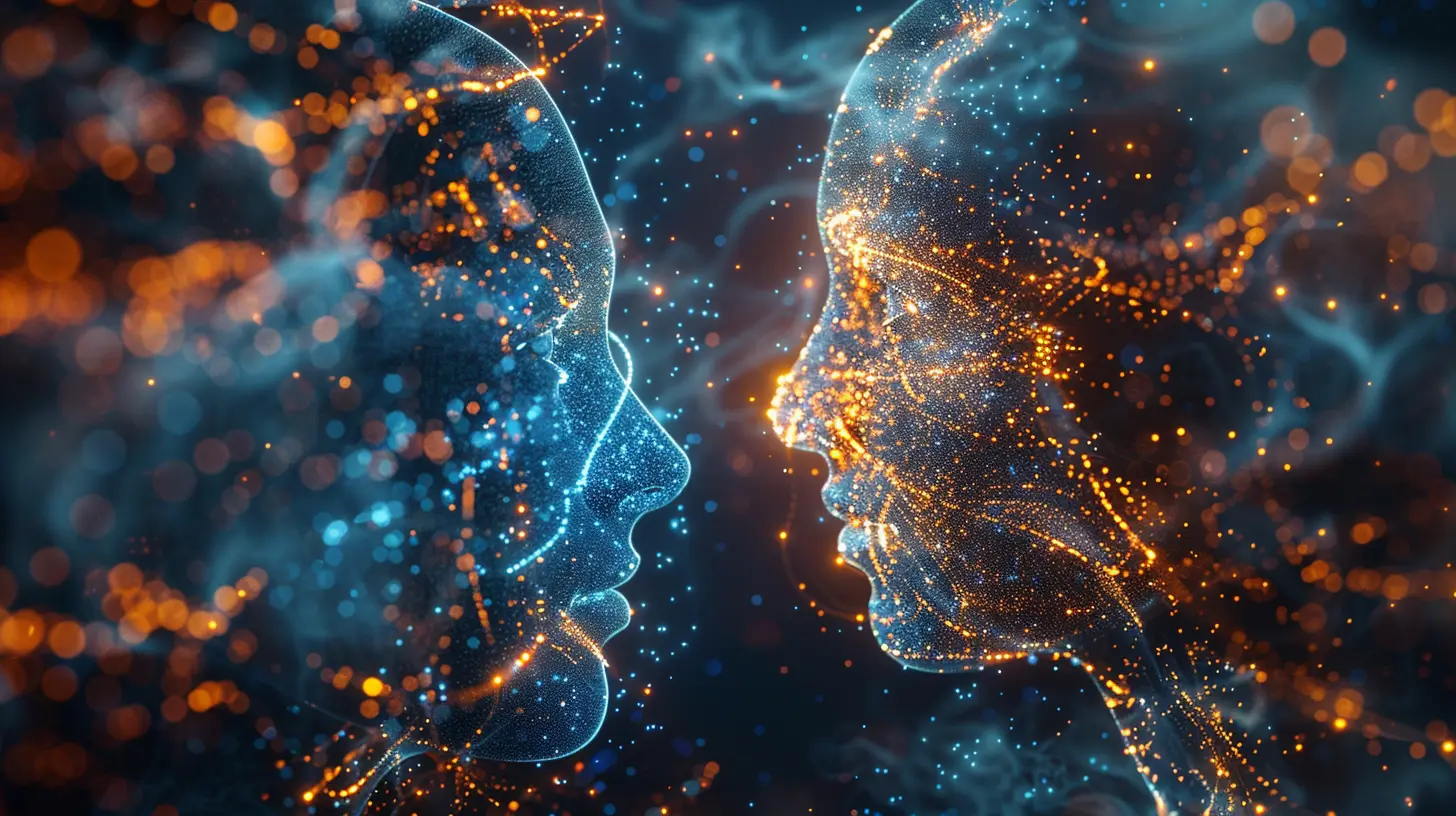
Learning Through Imitation: Monkey Business
Think about how babies learn. They don’t read manuals or take online courses. Nope. They watch and copy. From facial expressions to language skills, children absorb the world around them like little sponges.That’s mirror neurons doing their thing.
Even as adults, we rely on this same mechanism. Learning a new dance move? Watching a YouTube tutorial? Picking up someone’s accent after hanging out with them for too long? Thank your mirror neurons for that weird, subconscious mimicry.
We learn socially, and mirror neurons make that possible.
Mirror Neurons and Nonverbal Communication: Reading the Room
Nonverbal cues — gestures, facial expressions, tone of voice — make up the majority of human communication. Mirror neurons help us interpret these signals automatically.You’re in a meeting, and your boss subtly raises an eyebrow. Without a word, you get the message. Or maybe someone rolls their eyes across the room, and you instantly know they're annoyed.
It’s not just “intuition” — it’s neurobiology. Your brain is mapping that person’s nonverbal behavior onto your own motor system. You feel what they’re (literally) expressing.
Bam. Instant social decoding.
Autism and the Mirror Neuron Theory
Now, let’s tackle something a bit more complex.Some researchers believe that dysfunction in the mirror neuron system may be linked to autism spectrum disorder (ASD). Since mirror neurons are tied to empathy, imitation, and social understanding, any irregularities in how they work could impact social behavior.
For example, children with autism often struggle with eye contact, reading emotional cues, or mimicking others — all behaviors potentially tied to a weaker mirror neuron response.
Now, let’s be clear: This theory isn’t universally accepted, and autism is incredibly nuanced. But exploring the mirror neuron angle has opened up new avenues for therapies and understanding diverse ways the brain can work.
The Dark Side of Mirror Neurons: When Empathy Backfires
Mirror neurons give us empathy, sure — but empathy isn’t always sunshine and rainbows.Ever felt emotionally drained after listening to a friend vent? That’s emotional contagion, and it can be exhausting. Your mirror neurons are absorbing their stress, and your brain doesn’t know how to turn down the volume.
In some cases, excessive empathy can lead to compassion fatigue or burnout, especially in caregivers, therapists, and even parents.
So yeah, mirror neurons can be a double-edged sword. Super powerful, but like all superpowers — they need managing.
Mirror Neurons in Group Behavior: The Herd Mentality
Ever been to a concert and felt the electric buzz of the crowd? Gotten swept up in a protest or sporting event? That’s not just hype — it’s collective emotion, amplified and mirrored within the group.Mirror neurons help us bond with others and sync up emotionally. In large groups, this creates a ripple effect — a type of emotional resonance. If one person panics, many follow. If one person starts dancing, soon the whole crowd might be vibing.
It’s known as “emotional contagion,” and mirror neurons are the conductors of this neuro-social symphony.
Mirror Neurons and Cultural Connection
Culture doesn’t just happen — it’s passed down through imitation. The way we speak, greet, eat, even celebrate — all these behaviors are learned through watching others.Mirror neurons help preserve and transmit these behaviors across generations. They’re like carriers of human tradition.
Ever traveled abroad and instinctively mimicked the way locals greet each other or hold eye contact? That’s not just trying to fit in — it’s your mirror neurons going to work in real-time, adapting you to a new social environment.
Neuroplasticity and Mirror Neurons: Train Your Brain
Here’s some good news: You’re not stuck with the mirror neuron wiring you were born with. Thanks to neuroplasticity — the brain’s ability to rewire itself — you can train these neurons to become more responsive and attuned.Practices like mindfulness, emotional intelligence training, and even acting classes can actually boost your mirror neuron system’s effectiveness. Fancy, right?
Want to be more empathetic? Try consciously observing others’ body language. Want to improve communication? Watch how people respond when you speak. Then adjust. Rinse. Repeat.
Are Mirror Neurons Unique To Humans?
Nope — other animals have mirror neurons too. Aside from monkeys, researchers have found similar systems in birds, dogs, and even dolphins.But here’s the kicker: Human mirror neurons seem to be way more advanced. This might explain why we have complex language, abstract thought, and deep social connection.
It’s not just about copying actions. It’s about understanding intent, predicting behavior, and feeling emotion — as if we were in someone else’s shoes. Try getting a cat to understand sarcasm. Not going to happen.
So… Are We All Just Mirroring Each Other?
In a way, yeah.Your brain is constantly scanning, syncing, and simulating the people around you — whether you realize it or not. That’s how we form bonds, navigate social situations, and survive as a species.
Mirror neurons are like the backstage crew of your social life. They’re not the stars of the show, but without them? Everything would fall apart.
Bringing It All Together
When it comes to understanding human behavior, mirror neurons are a game-changer. They’ve flipped the script on how we talk about empathy, learning, communication, and even disorders like autism.So the next time you catch yourself finishing someone else’s sentence, crying during a Pixar movie, or cringing when your friend stubs their toe — thank your mirror neurons. They’re doing the emotional heavy lifting, connecting you to the people around you in deep, invisible ways.
And let’s be honest — that’s kind of amazing.
Final Thoughts
We live in a world that’s more connected than ever, but real human connection? That starts in the brain. At the heart of empathy, learning, and social behavior lies one of neuroscience’s most fascinating discoveries: mirror neurons.So yeah, maybe we are just a bunch of social mirrors, reflecting each other’s actions and emotions. And maybe — just maybe — that’s what makes us so beautifully, wonderfully human.
all images in this post were generated using AI tools
Category:
Behavioral PsychologyAuthor:

Jenna Richardson
Discussion
rate this article
2 comments
Caelestis Rhodes
Could the silent echoes of our emotions mirror back through the eyes of others? Discover the unseen threads connecting us in social behavior.
February 2, 2026 at 6:08 PM
Jenna Richardson
Absolutely! Mirror neurons play a crucial role in how we empathize and connect with others, allowing us to resonate with their emotions and strengthen social bonds.
Aubrey McNulty
Mirror neurons illustrate the profound interconnectedness of human experience, highlighting how our emotions and actions resonate with others. Understanding their role in social behavior can deepen our empathy and enhance our relationships, reminding us that in our shared humanity, we find both vulnerability and strength.
December 30, 2025 at 5:03 PM
Jenna Richardson
Thank you for your insightful comment! Indeed, mirror neurons play a crucial role in fostering empathy and understanding in our social interactions, ultimately enriching our shared human experience.