Procrastination and the Fear of Failure
29 November 2026
Procrastination is rarely a time-management problem. Most people who delay important work know exactly what they should be doing and when. They have calendars, apps, and reminders. What they lack is not information but a willingness to walk toward something that feels threatening. When you strip away the excuses, a large share of chronic delay traces back to fear: fear of doing badly, fear of being judged, fear of confirming a suspicion you already hold about yourself.
This article examines that link closely. It looks at why fear of failure produces delay rather than effort, how the two reinforce each other over time, where common advice goes wrong, and what actually helps. The goal is not to eliminate fear, which is neither possible nor desirable, but to change your relationship to it so that action becomes possible again.
Why Fear of Failure Leads to Delay Instead of Effort
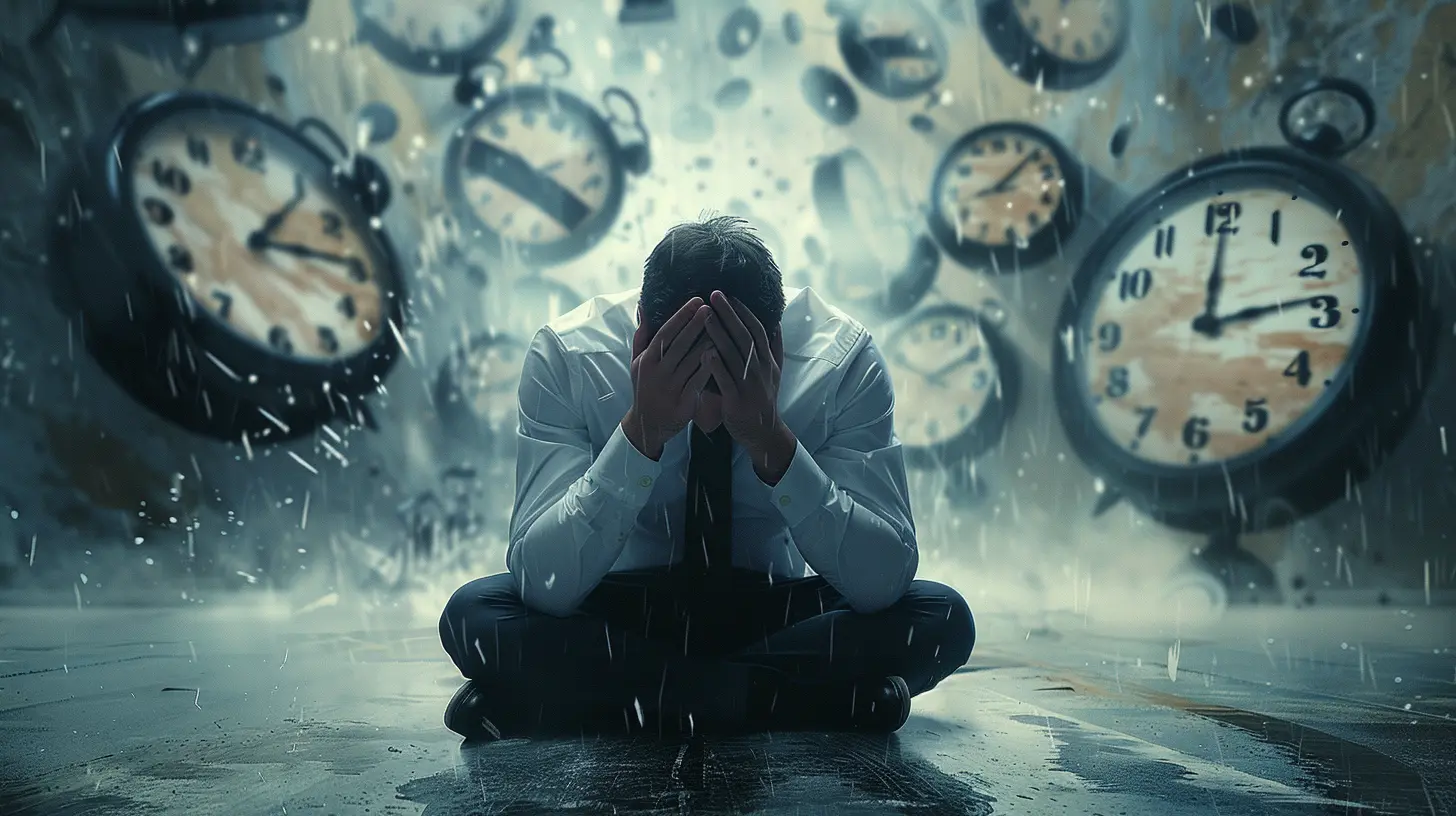
The logic of procrastination seems backward at first. If you are afraid of failing a task, the sensible response would be to start early, prepare thoroughly, and reduce the risk. Yet many people do the opposite. They wait until the deadline is close enough that the threat of a poor outcome is overtaken by the threat of no outcome at all.The reason is that fear is not primarily a signal to act. It is a signal to protect. When you anticipate failure, your mind treats the task as a source of danger, and avoidance is the fastest way to make the danger go away. Starting the work means confronting the possibility of doing it badly. Delaying means you do not have to find out yet. Relief arrives immediately, which is precisely why the pattern sticks.
There is also a self-protective story buried in the delay. If you finish something and it is mediocre, the conclusion is unambiguous: you tried and fell short. If you wait until the last minute and produce something mediocre, you retain an explanation. The task was rushed. You did not have time. The outcome says less about your ability. This is sometimes called self-handicapping, and it is one of the most common ways fear of failure disguises itself. The cost is real performance, traded for the preservation of a self-image.
A third factor is the gap between the imagined task and the actual task. Fear inflates the work. The report becomes a verdict on your competence. The conversation becomes a confrontation. The application becomes a judgment of your whole trajectory. When the mental version of a task is that loaded, avoidance feels rational. The problem is that the inflated version is rarely accurate, and the only way to find that out is to begin.

The Two Faces of Perfectionism
Fear of failure and perfectionism are close relatives, but they do not always look the same. It helps to separate two forms, because the advice for each differs.The first is rigid perfectionism. The standard is impossibly high, and anything short of it feels like failure. People in this mode often delay starting because the first draft, the first attempt, or the first version cannot possibly meet the standard. The blank page is unbearable because everything on it will be wrong by comparison. The result is paralysis dressed up as high standards.
The second is anxious perfectionism, where the person is not aiming for excellence so much as trying to prevent a negative outcome. The focus is on avoiding mistakes rather than achieving something good. This produces endless checking, reworking, and hesitation. Work gets done, but slowly and painfully, and the person is exhausted rather than satisfied.
Both forms feed procrastination, but they require different interventions. Rigid perfectionism responds to lowering the entry threshold: allowing rough drafts, setting deliberately modest first goals, separating generation from evaluation. Anxious perfectionism responds better to defining "done" in advance, limiting revision rounds, and accepting that some errors will survive. Treating one as if it were the other is a common mistake. Telling a rigid perfectionist to "just do your best" does nothing, because their best is the problem. Telling an anxious perfectionist to "relax" ignores that their vigilance feels like the only thing keeping disaster away.

How the Cycle Sustains Itself
Procrastination and fear of failure form a loop, and the loop strengthens with repetition. The sequence usually looks like this:1. A task triggers an anticipated negative outcome.
2. Anxiety rises, and avoidance provides immediate relief.
3. Time passes, and the deadline approaches.
4. Pressure increases, and the work is done quickly and poorly, or not at all.
5. The result confirms the original fear, or at least does not disprove it.
6. The next task triggers more anxiety, because the pattern is now familiar.
The critical step is the fifth. Because the rushed work is rarely your best, the outcome does not actually test your ability. But the emotional mind does not make that distinction. It records the experience as evidence that the task is dangerous and that you are not up to it. Over time, the fear generalizes. A single difficult assignment becomes a category of tasks to be avoided. The avoidance becomes a habit, and the habit becomes part of how you see yourself.
There is a second loop running in parallel, involving shame. Delay often produces guilt, and guilt makes the task even more aversive. Now you are avoiding not only the work but the feeling of having avoided it. This is why people sometimes cannot even open the document or the email. The task has become a reminder of their own perceived failure, and avoidance is the only way to stop the reminder. Breaking the cycle requires interrupting it at more than one point, which is why single-strategy fixes rarely hold.

What Fear of Failure Is Not
Several common assumptions about this pattern are worth correcting, because they lead people toward the wrong solutions.It is not laziness. Laziness implies a preference for ease over effort. Most people who procrastinate out of fear are working hard, just not on the thing that matters. They clean, reorganize, answer email, and help others. The effort is there. It is directed away from the threat.
It is not a lack of discipline. Discipline helps with tasks that are boring but safe. Fear-based delay is different. You can be highly disciplined in one area and paralyzed in another, and the difference is usually emotional rather than structural.
It is not solved by motivation. Motivation is a feeling, and feelings are unreliable. Waiting to feel ready is itself a form of avoidance. The people who get things done are not more motivated on average. They have lower thresholds for starting and better systems for continuing when motivation dips.
It is not always about high stakes. Sometimes the task is objectively minor, like making a phone call or sending a short message. The stakes are low, but the anticipated judgment is not. Fear responds to perceived social and self-evaluative risk, not to the size of the task on paper.
Practical Strategies That Address the Fear Directly
General productivity advice often fails because it targets time rather than emotion. The following approaches work specifically on the fear side of the equation.Name the specific fear
Vague anxiety is hard to act against. Specific fear is manageable. Write down what you are actually afraid will happen. Not "I am worried about this project" but "I am afraid my manager will think I am not capable" or "I am afraid I will find out I do not understand this material." Naming the fear does two things. It reduces its intensity, because unspoken fears tend to be larger than spoken ones, and it makes the fear testable. You can ask whether the feared outcome is likely, what you would do if it happened, and whether the evidence supports it. Often the fear shrinks when examined. Sometimes it does not, but at least you now know what you are dealing with.Separate the work from the verdict
Much of the fear comes from treating a single task as a judgment on your worth or potential. A useful move is to explicitly decouple the two. Before starting, state what the task is and what it is not. "This is a draft, not a final product." "This is one conversation, not a referendum on the relationship." "This is a first attempt, and first attempts are supposed to be rough." This sounds simple, and it is, but it changes the frame from evaluation to experimentation. Experiments are allowed to fail. That is what makes them useful.Lower the entry threshold
The hardest part of most feared tasks is the first few minutes. Reduce the size of the first step until it feels almost trivial. Do not "write the report." Open the document and write one sentence. Do not "prepare the presentation." Write the title slide. The purpose is not to trick yourself into doing more, although that often happens. The purpose is to get past the moment where avoidance is most likely. Once you have started, the task usually looks different, because the imagined version has been replaced by the actual one.Set a time limit rather than an outcome goal
When fear is high, outcome goals increase pressure. Time-based goals reduce it. Commit to twenty minutes of work rather than to finishing a section. This works because it removes the implicit demand to succeed and replaces it with a demand to show up. You can tolerate twenty minutes of discomfort. You cannot tolerate an indefinite period of potential failure. The time limit makes the exposure finite, which makes it bearable.Use implementation intentions
Decide in advance when, where, and how you will start. "At 9 a.m. tomorrow, at the kitchen table, I will open the file and write the first paragraph." This is sometimes called an implementation intention, and it helps because it moves the decision out of the moment of anxiety. When the moment arrives, you are not deciding whether to start. You are following a plan you already made. The fear is still present, but it no longer has to be negotiated with in real time.Build in a deliberate first draft
If perfectionism is driving the delay, schedule a draft that is explicitly allowed to be bad. Some writers call this a "vomit draft." The point is to produce material that can be improved rather than to produce something good. This works because it separates two cognitive tasks that compete with each other: generating and evaluating. Trying to do both at once is slow and anxiety-inducing. Doing them in sequence is faster and calmer.Expose yourself to small failures on purpose
Fear of failure shrinks when failure turns out to be survivable. You can accelerate this by taking small, low-stakes risks deliberately. Send an email without rereading it five times. Submit work you know is not perfect. Ask a question you are afraid sounds stupid. Each time the feared outcome does not materialize, or materializes and is manageable, the fear loses some of its authority. This is essentially exposure therapy applied to everyday work, and it works for the same reason exposure works in clinical settings: the brain updates its predictions based on experience, not argument.Address the shame separately
If guilt about past procrastination is now part of the problem, willpower will not fix it. Shame tends to intensify avoidance, so the goal is to reduce it rather than push through it. Self-compassion practices, which involve treating yourself as you would treat a struggling friend, have been studied as a way to reduce procrastination, and the logic is straightforward: people who are less afraid of self-condemnation have less reason to avoid the task. This is not about letting yourself off the hook. It is about removing a barrier that makes the hook harder to reach.
When These Strategies Are Not Enough
The approaches above are effective for ordinary fear of failure, which is common and manageable. They are not a substitute for professional help when the pattern is severe or when it coexists with other conditions.Consider seeking support from a qualified professional if procrastination is causing significant distress, if it is affecting your work or relationships in serious ways, if it comes with persistent low mood, anxiety, or feelings of worthlessness, or if you have tried several strategies over time without meaningful change. Fear of failure can overlap with anxiety disorders, depression, attention difficulties, and other conditions, and these require assessment by someone trained to do it. Self-help strategies are useful, but they are not a diagnosis and they are not treatment.
There is also a practical limit to what any article can offer. Reading about procrastination can itself become a form of avoidance. If you have read this far and recognized yourself, the most useful next step is probably not to read more. It is to pick one strategy, apply it to one task, and see what happens. The information is only useful if it changes behavior.
Common Mistakes to Avoid
A few errors consistently undermine well-intentioned attempts to change this pattern.Waiting for the fear to go away. It usually does not go away before you start. It goes away, or at least quiets down, after you start. Waiting for courage is a trap. Action produces the calm, not the other way around.
Relying on deadlines. Deadlines work, but they work by replacing one fear with another. They get the task done at the cost of quality, stress, and the reinforcement of the belief that you can only function under pressure. Use them as a backstop, not as a strategy.
Over-planning. Elaborate systems and productivity tools can feel like progress while functioning as avoidance. If your planning takes longer than the task, the planning is the procrastination.
Treating one slip as a relapse. Everyone delays sometimes. The danger is not the delay itself but the interpretation. A single avoided task does not mean you are back where you started. It means you are a person who had a hard day. The interpretation matters more than the event.
Confusing self-criticism with accountability. Harsh self-talk feels like it should motivate, but it usually increases avoidance by making the task more emotionally costly. Accountability works better when it is specific and behavioral rather than global and character-based.
A Realistic View of Progress
Fear of failure does not disappear. High-achieving people often carry it for decades. What changes is how much room it takes up and how quickly you act despite it. The goal is not to become fearless. It is to shorten the gap between the moment fear appears and the moment you begin, and to stop letting the fear make decisions on your behalf.Progress is uneven. You will have weeks where starting feels easy and weeks where it does not. The measure that matters is not whether you feel calm before a difficult task. It is whether you start anyway, more often than you used to. That is a realistic and achievable standard, and it is a far better one than waiting to become someone who no longer struggles.
If you take one thing from this article, take this: the task you are avoiding is almost certainly smaller than the fear surrounding it, and the only reliable way to find that out is to begin before you feel ready.
all images in this post were generated using AI tools
Category:
Procrastination SolutionsAuthor:

Jenna Richardson