How Nature Reconnects You With Your Authentic Self
20 October 2026
There is a particular kind of quiet that settles over a person about twenty minutes into a walk through woods. The mental chatter that felt so urgent in the parking lot starts to thin out. Shoulders drop. Breathing deepens without anyone deciding to change it. Most people notice this shift but rarely examine it. They call it "fresh air" or "needing a break" and move on. But something more precise is happening, and understanding it matters if you want to use time outdoors as more than a pleasant distraction.
The concept of an "authentic self" gets thrown around loosely in popular psychology, often meaning little more than "the version of you that is not pretending." A more useful definition comes from the humanistic tradition: the authentic self is the organizing center of your experience when you are not managing impressions, defending against threat, or performing a role. It is the part of you that knows what you actually value, what you actually feel, and what you actually want, beneath the layers of adaptation that daily life demands.
Reconnecting with that self is not mystical. It is a shift in attention and arousal, and natural environments are unusually good at producing it. This article explains why that happens, when nature helps and when it does not, and how to structure time outdoors so the effect lasts longer than the car ride home.
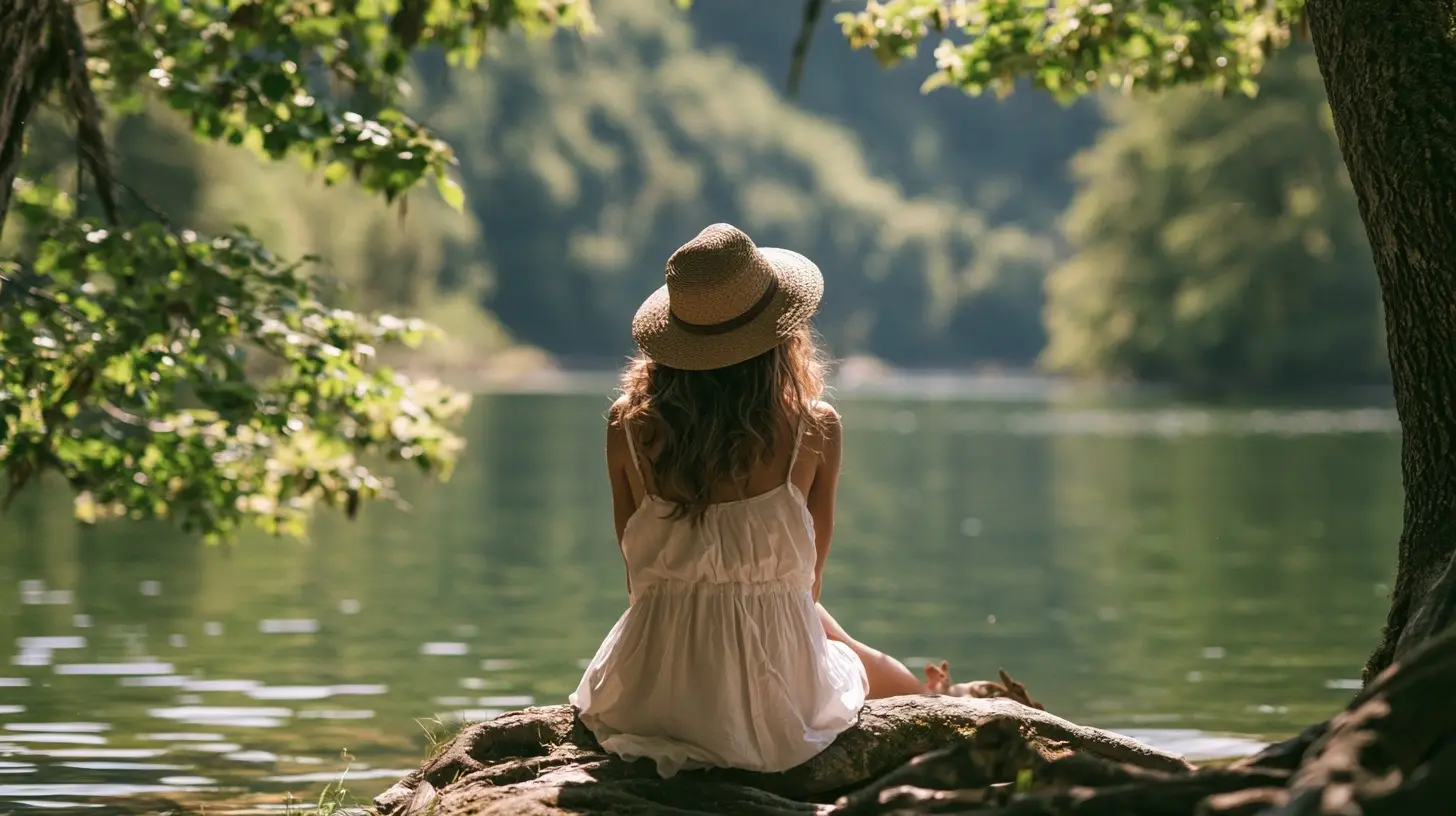
Why Natural Environments Change Inner Experience
Attention restoration: the mechanism most people miss
The psychologist Stephen Kaplan proposed that directed attention, the effortful focus we use for work, screens, and conversation, is a finite resource that depletes like a muscle. Natural environments are rich in what he called "soft fascination": moving leaves, birdsong, the play of light, patterns of cloud. These features hold attention gently, without demanding it. While soft fascination occupies the mind, directed attention recovers.This matters for authenticity because directed attention is the currency of self-monitoring. When you are depleted, you default to scripts, habits, and social reflexes. You answer "how are you" with "fine" before checking whether it is true. Restored attention creates the cognitive slack needed to notice what you actually think and feel. In other words, nature does not inject authenticity into you. It removes the fatigue that keeps authenticity offline.
Reduced self-focused rumination
A well-documented pattern in research on mood and environment is that time in natural settings tends to reduce rumination, the repetitive, self-critical loop that keeps people stuck in narratives about who they are and what went wrong. Rumination is not the same as self-reflection. Reflection is curious and open-ended. Rumination is closed and accusatory. Nature appears to shift the balance toward the former, partly through soft fascination and partly through a change in visual scale.Wide horizons, tall trees, and open water make a person feel small in a way that is not humiliating but freeing. The problems that filled the entire frame of attention indoors become one element in a larger scene. This is not escapism. It is recalibration. The self that emerges from that recalibration tends to be less defensive and more honest.
The body leads the mind
Authenticity is often treated as a purely cognitive achievement, a matter of thinking clearly. In practice, it is heavily physical. When the nervous system is in a chronic state of threat, the body prioritizes vigilance over honesty. You cannot access genuine preferences while bracing for criticism.Natural environments offer what researchers sometimes call "restorative physiological conditions": slower breathing, lower heart rate, reduced muscle tension, and a shift toward parasympathetic activity. These changes are not just pleasant side effects. They are preconditions. A calm body can tolerate the discomfort of admitting what you really want, which is often inconvenient or socially risky. A tense body will choose the safe answer every time.

What Authenticity Actually Looks Like in Practice
It helps to be concrete, because "being your authentic self" is too abstract to act on. In real life, reconnection tends to show up in several specific ways.First, clearer preferences. You notice that you actually dislike a commitment you have been tolerating, or that you genuinely enjoy something you dismissed as frivolous. Second, more accurate emotional information. You can name what you feel without immediately editing it into something more acceptable. Third, a shift in values salience. Priorities that were buried under urgency resurface, and things that felt important reveal themselves as performative.
Fourth, and most tellingly, a change in the quality of decisions. Authentic decisions tend to be simpler. They require less justification, less polling of other people, and less rehearsal of arguments. They may still be difficult, but they stop feeling like negotiations with yourself.
Nature supports all four, but not automatically. A person can walk through a forest for an hour while replaying a work conflict in their head and emerge no more connected to themselves than before. The environment creates favorable conditions. What you do with those conditions determines the outcome.
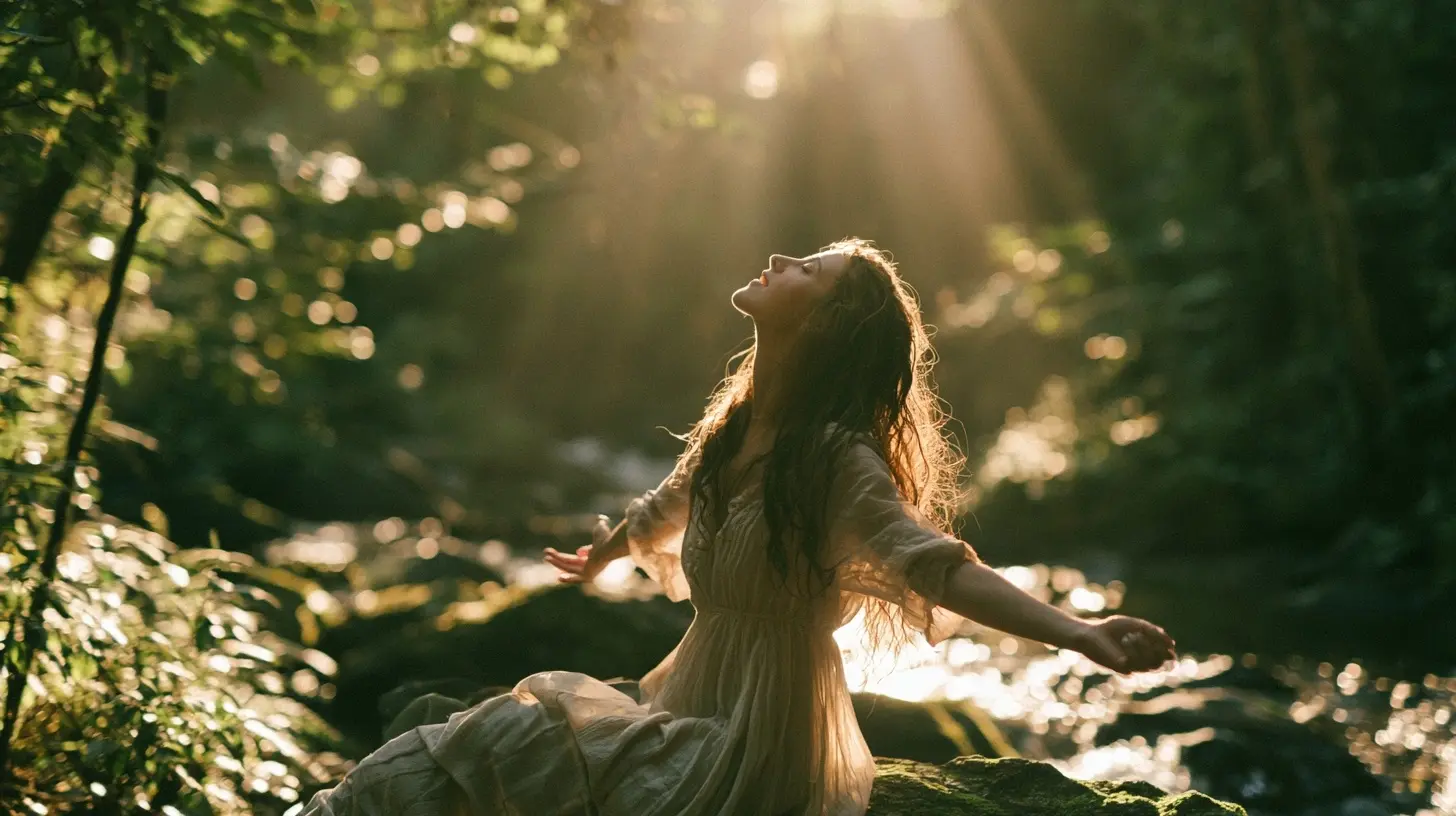
How to Use Nature Deliberately
Choose duration that matches your goal
A short walk has real value, but the effects differ by duration. Ten to fifteen minutes outdoors can lower arousal and interrupt a rumination loop. That is useful for a reset between meetings. For deeper reflection, most people need longer, often forty minutes to several hours, because the first portion of any outing is spent discharging residual activation from the day.Consider what you are trying to accomplish. If you want to decompress, a brief walk near water or trees is sufficient. If you want to think through a values question or a difficult decision, budget enough time for the mental noise to settle. The transition is not instant, and expecting it to be leads people to conclude that nature "does not work for them" when they simply did not stay long enough.
Match the environment to the state you are in
Not all natural settings produce the same effect. Dense forest tends to enclose and calm, which suits agitation and overload. Open landscapes with long sight lines suit rumination, because the visual expansiveness counteracts the tunnel vision of repetitive thought. Water has a particular pull for many people, likely because its movement is rhythmic and predictable without being monotonous.There is a trade-off here. Highly scenic, popular locations offer stronger restorative features but often come with crowds, which reintroduce social monitoring. A less impressive but quiet local park may serve authenticity better than a famous viewpoint full of tourists. Solitude, or at least the absence of social demand, is often the more important variable.
Decide whether to bring company
Walking with another person can deepen reflection if the conversation is honest and unhurried. It can also convert the entire outing into social performance, which defeats the purpose. A useful practice is to separate the two. Go alone when the goal is to hear your own thinking. Go with others when the goal is connection. Mixing them without intention usually produces neither.If you do go with someone, consider a simple agreement: part of the walk is silent. Many people find that shared silence outdoors is easier than shared silence indoors, and it creates room for whatever wants to surface afterward.
Leave the input behind
This is the most common mistake. People bring headphones, podcasts, or a phone they check every few minutes, then wonder why the woods felt like a slightly greener commute. Audio input occupies the same attentional channels that soft fascination needs. If you want nature to do its work, give it an unoccupied mind.This does not require total abstinence. A compromise many people find workable is to walk for the first twenty minutes with nothing, then allow input afterward if desired. The quiet portion is where the reconnection happens.
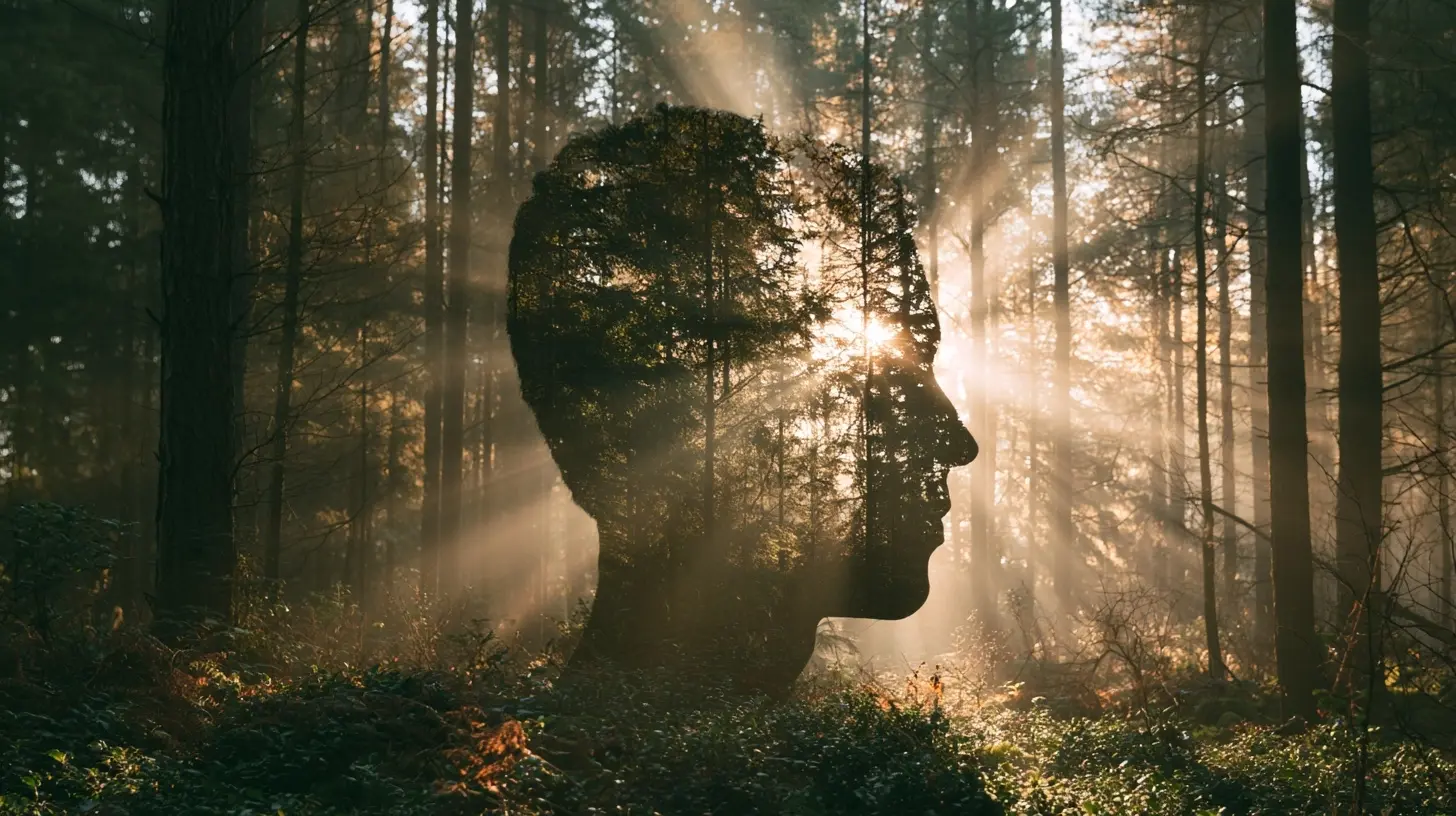
Common Misconceptions and What They Cost
Misconception one: nature is a cure for everything. It is not. Time outdoors is a supportive condition, not a treatment. For significant depression, anxiety disorders, or trauma, nature can complement professional care but should not replace it. Presenting it as sufficient is both inaccurate and potentially harmful.Misconception two: you need wilderness. Remote landscapes are powerful, but the evidence for restorative effects does not require them. Urban parks, greenways, gardens, and even tree-lined streets produce measurable benefits. The barrier of "I do not live near mountains" keeps many people from trying at all, which is a costly error.
Misconception three: more intensity is better. Some people turn outdoor time into a performance goal: longer hikes, harder trails, more summits. Achievement-oriented outdoor activity has real value, but it activates the same evaluative mindset you were trying to escape. If every walk becomes a workout with metrics, you have changed the setting, not the mode.
Misconception four: insight arrives during the walk. Often it does not. Many people report that the clearest realizations come hours later, or the next morning, while doing something unrelated. The walk may be doing its work below awareness. Judging a single outing by whether it produced an immediate epiphany is a setup for disappointment. Look for cumulative patterns over weeks, not instant results.
When Nature Is Not the Right Tool
Honesty about limits strengthens rather than weakens the case for nature. There are situations where time outdoors is the wrong intervention.If you are in acute crisis, safety and human support come first. A walk is not a substitute for reaching out. If you are using nature primarily to avoid a conversation or a decision, the outdoors becomes another form of avoidance, and it will feel restorative while quietly delaying what matters. If mobility, health, or access constraints make outdoor time difficult, the same restorative mechanisms can be partially accessed through window views, indoor plants, recorded nature sound, or brief time in any green space, though the effects are generally smaller. And if you notice that you feel worse outdoors, not better, that is worth taking seriously rather than pushing through. Sometimes solitude amplifies distress, and company or professional support is the better choice.
Making Reconnection Last
The reconnection produced by a single walk fades. What accumulates is a practice. Three elements tend to make the difference.First, frequency matters more than duration. Short, regular time outdoors outperforms occasional long excursions for most people, because it keeps the nervous system from returning fully to baseline overload.
Second, carry something back. Many people find it useful to note, briefly, what they noticed about themselves during or after time outdoors: a preference, a feeling, a question. Written or spoken, this converts a pleasant experience into usable self-knowledge. Without some form of capture, the insight dissolves into the general glow of a nice afternoon.
Third, test the findings in ordinary life. Authenticity is not a state you achieve in the woods and lose in the office. It is a set of choices you make with the clarity you brought back. If a walk revealed that a commitment is draining you, the reconnection is only real when you act on it, even in a small way.
A Realistic Picture
Nature is not magic, and treating it as magic sets people up to dismiss it when the first few walks do not transform them. What the outdoors offers is a reliable set of conditions: restored attention, a calmer body, reduced rumination, and a change in visual and social scale. Under those conditions, most people find it easier to hear themselves.The work is not in finding a spectacular place. It is in going regularly, going quietly, staying long enough, and paying attention to what surfaces. Do that for a few weeks and the pattern becomes hard to miss. The person who returns from the trail is not a different self. It is the same self, with less interference.
all images in this post were generated using AI tools
Category:
Authentic LivingAuthor:

Jenna Richardson