The Psychology of Religious Framing in Public Discourse
September 6, 2026 - 11:49
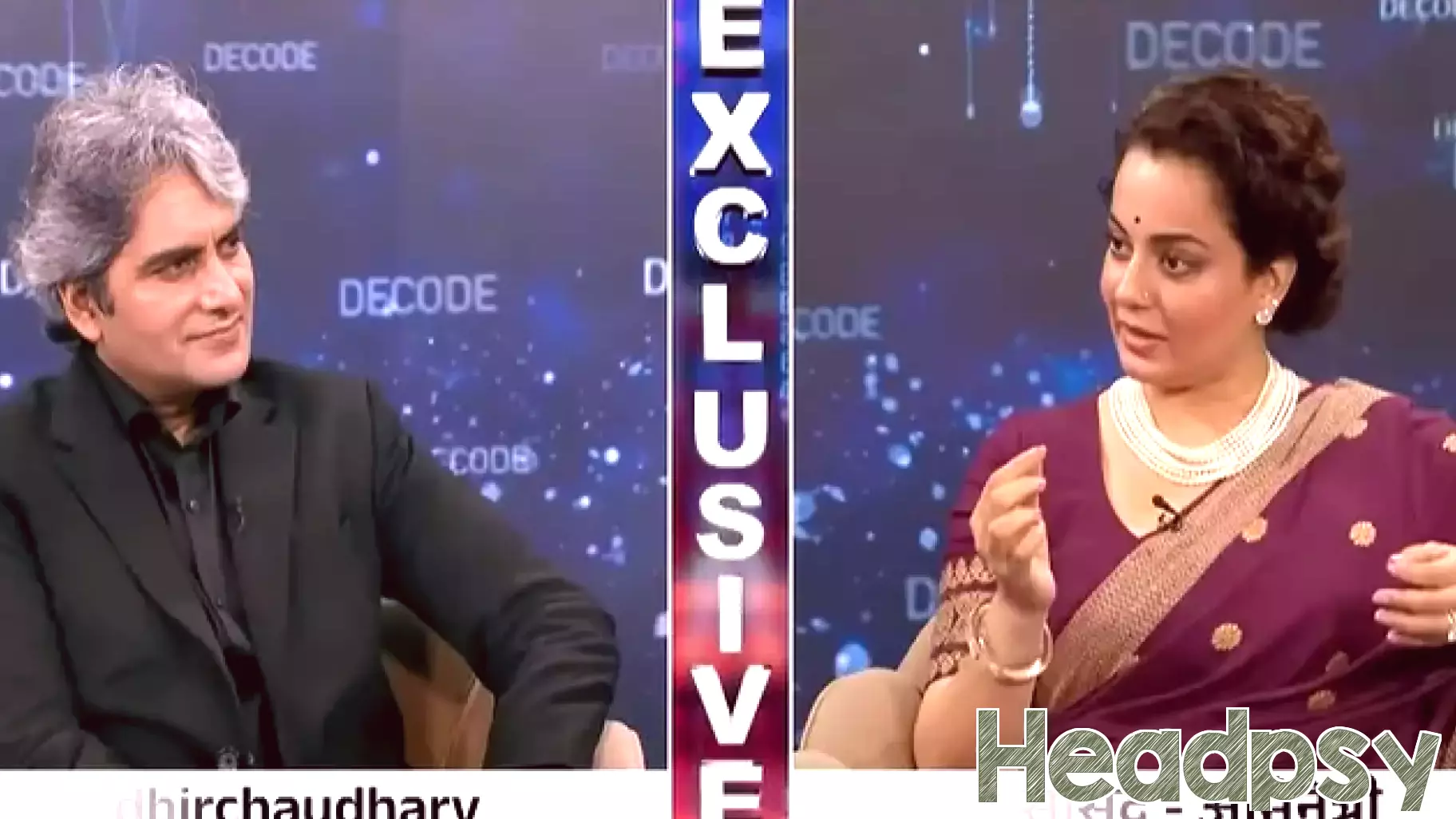
The recent controversy surrounding Kriti Sanon's Raksha Bandhan advertisement has taken an unexpected turn, dragging actress Kangana Ranaut into a debate that did not need to involve her. What began as a discussion about cultural representation in advertising quickly devolved into a personal attack, fueled by a media personality who seemed more interested in generating conflict than in addressing the actual issue.
Sunil Chaudhary, an anchor known for his provocative style, chose to ask Ranaut a question that was less about journalism and more about baiting. The question, which many have described as deliberately inflammatory, was framed in a way that forced Ranaut to respond to a situation she had no part in. This tactic, often seen in public discourse, relies on the psychology of religious and cultural framing to elicit an emotional reaction rather than a thoughtful conversation.
The strategy is not new. By wrapping a question in the language of faith and tradition, the interviewer creates a false dichotomy: either you support the cultural norm, or you are against it. This leaves no room for nuance. Ranaut, who is known for her outspoken views, was placed in a corner where any answer could be twisted into a headline. The result is a cycle of outrage that benefits no one except those who profit from clicks and views.
What is troubling is how easily such framing shifts the focus from the original subject. The advertisement, which was meant to celebrate the bond between siblings, became a battleground for ideological posturing. Instead of discussing the creative choices made by the brand, the conversation turned into a personal feud between two public figures who have little in common.
This incident highlights a broader issue in media today: the tendency to use religious sentiment as a weapon to silence or provoke. It is a cheap trick that undermines genuine debate. When a question is designed not to seek understanding but to force a reaction, it ceases to be journalism and becomes performance art.
Ranaut, for her part, did not take the bait quietly. Her response was sharp, but the damage was already done. The original issue was buried under a pile of manufactured controversy. In the end, the only winner is the media outlet that gets its moment of viral attention, while the public is left with a distorted version of what actually matters.
MORE NEWS

October 21, 2026 - 01:40
Why Festival Prices Keep Climbing and Why We Keep PayingIf you went to a music festival this summer, whether it was Osheaga, Coachella, or Lollapalooza, you probably noticed that everything cost more. The ticket itself was likely higher than last year....

October 20, 2026 - 01:45
Utah Tech to Launch Clinical Psychology and Counseling Master's ProgramUtah Tech University has received approval to offer a new master`s program in counseling and clinical psychology, with the first cohort set to begin in fall 2027. The announcement, made Tuesday,...

October 19, 2026 - 01:41
Psychologists Say THIS Is Why You’re So Drawn to Antique Decor and Old PlacesThere is a reason some people cannot walk past a flea market without stopping, or why a weathered farmhouse or a cobblestone street can feel strangely comforting. Psychologists say the pull toward...

October 18, 2026 - 03:39
The Power of Productive Conflict in Creative WorkLeonard Bernstein`s famous clash with Glenn Gould offers a striking lesson in how workplace conflict can become a source of brilliance rather than breakdown. The two men disagreed fundamentally...