The Psychology of Holding On to Beliefs
February 7, 2026 - 12:06

New research delves into the complex psychological machinery that keeps our convictions firmly in place, revealing that facts are often powerless against deeper forces. Our beliefs are rarely just collections of data; they are interwoven with our sense of identity, emotional experiences, and the communities we trust.
When confronted with contradictory evidence, the brain's response is frequently not logical, but protective. A belief tied to one's self-worth or group affiliation becomes a part of the psychological self. Challenging it can feel like a personal attack, triggering defense mechanisms rather than rational analysis. Emotion and personal narrative often trump cold, hard facts.
Furthermore, the source of information matters profoundly. Trust in a person or institution can outweigh the content of the message itself. A deeply held belief often rests on a foundation of personal stories and lived experiences, which feel more authentic and powerful than abstract statistics.
This understanding suggests that shifting someone's viewpoint requires more than presenting evidence. It involves empathy, building trust, and connecting on a human level, acknowledging the core identity and values that make the belief meaningful in the first place. The path to changing a mind often begins by understanding the heart that holds it.
MORE NEWS

September 20, 2026 - 23:18
Understanding Chronic Traumatic Encephalopathy and Its Warning SignsChronic traumatic encephalopathy, commonly known as CTE, has become a growing concern in the world of contact sports and beyond. Once considered a rare condition, research now suggests it may be...

September 20, 2026 - 16:38
Psychology says people who fold the towel back the way they found it share 6 traits that predict a long marriageMost people wouldn`t think about the towel. This person can`t not think about it. The way a towel is folded and placed back on the rack might seem like a minor detail in the grand scheme of a...

September 19, 2026 - 17:49
Rethinking the Baby Bag: A New Look at Maternal AmbivalenceA candid conversation has brought fresh attention to the complicated emotional world of motherhood, using a simple metaphor to capture what many parents feel but rarely say out loud. The idea,...
September 19, 2026 - 06:38
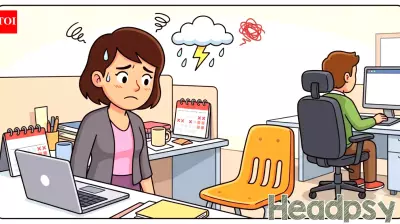
Someone took your usual office chair? Psychology explains why it can feel strangely unsettlingYou walk into the office, glance across the room and stop. Someone is sitting in your chair. It is a small thing, objectively. It is just a piece of furniture. Yet the feeling that washes over you...