Why Depression Is Still Misunderstood in 2026
20 April 2026
Let’s be honest for a second. If you had told someone in 1996 that in thirty years we’d have supercomputers in our pockets, cars that drive themselves, and instant access to the sum of human knowledge, they’d assume we’d have also cracked the code on something as human as depression. Yet here we are, in 2026, and despite the dazzling advances in neuroscience, therapy apps, and public discourse, depression remains profoundly, stubbornly misunderstood.
Why is that? It’s not for lack of trying. We talk about mental health more than ever. So why does the chasm between knowing of depression and truly understanding it persist? The answer isn't simple. It’s tangled in the very fabric of our biology, our language, and our society. Unraveling this knot shows us that our progress, while real, has also created new myths even as it dismantled old ones.

The Ghost in the Machine: When Biology Meets Experience
We’ve made incredible strides in mapping the depressed brain. We can point to neurotransmitters like serotonin and dopamine, highlight underactive regions like the prefrontal cortex, and show hyperactive stress responses in the amygdala. This is vital, groundbreaking work. But here’s where the first major misunderstanding takes root: we’ve confused the map for the territory.Think of it like this: if you have a headache, a brain scan might show increased blood flow in certain areas. That’s the correlate of the pain, the physical signature. But it is not the experience of the throbbing, the sensitivity to light, the frustration. In our well-intentioned push to legitimize depression as a "real illness" (which it absolutely is), we’ve often over-relied on a purely biomedical model. We say, "It’s a chemical imbalance," and leave it there. This, in 2026, is an outdated oversimplification.
The misunderstanding? It reduces a person’s profound, lived experience to a faulty wire or an empty tank. It implies that fixing the biology (with medication, which can be lifesaving and essential) automatically fixes the person. But depression doesn’t live solely in the synapses. It lives in the memory of a failed relationship, in the crushing weight of financial insecurity, in the existential dread of a warming planet, in the loneliness of a hyper-connected digital life. By 2026, we know the brain is plastic—it is shaped by our experiences. Depression is the ghost in the machine, a feedback loop where experience alters biology and that altered biology colors every new experience. To treat only the biology while ignoring the haunted house is a recipe for incomplete healing.
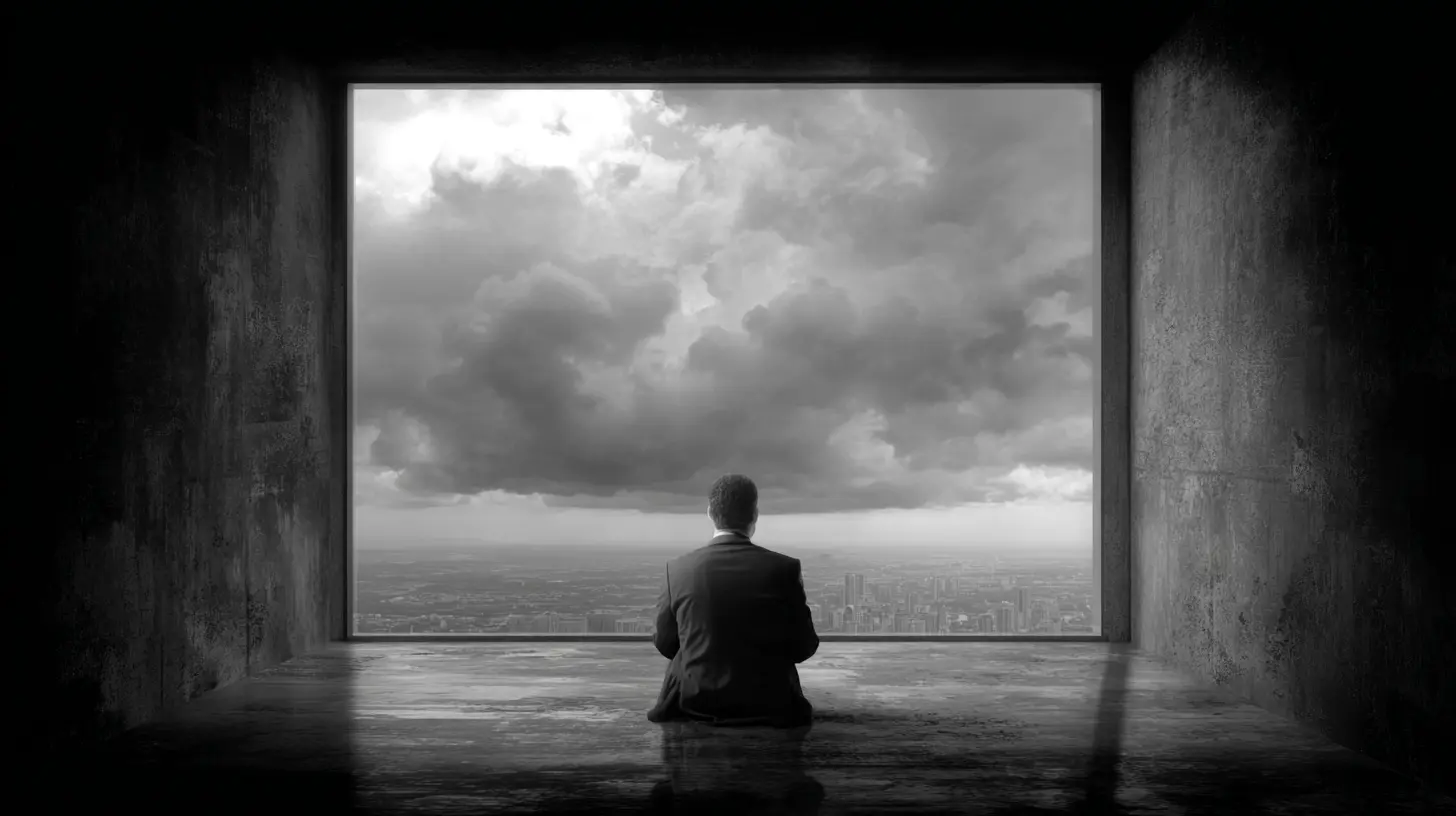
The Vocabulary of Invisible Pain: "Just" and "But"
Language is our primary tool for sharing inner worlds, and it fails us spectacularly with depression. We’ve expanded our lexicon—we use terms like "self-care," "triggers," and "lived experience." Yet, the most poisonous words in our dialogue remain deceptively simple: "just" and "but.""You just need to exercise more."
"Why don’t you just try to be positive?"
"I understand you’re sad, but you have so much to be grateful for."
These words are linguistic bulldozers. They don’t seek to build a bridge into the person’s reality; they seek to flatten that reality into something more comfortable for the listener. They translate the complex, paralyzing narrative of depression into a simple problem of motivation or attitude. It’s like telling someone with a broken leg to "just walk it off" because you can’t see the fracture.
In 2026, with AI generating empathetic-sounding scripts and wellness influencers packaging quick fixes, this language has become more sophisticated but no less shallow. The core misunderstanding is that depression is a state of sadness, something to be countered with its opposite. But depression is often an absence—a hollowing out of feeling, motivation, and vitality. You can’t "just" summon what isn’t there. This linguistic gap leaves sufferers feeling more isolated, convinced that if they can’t articulate their pain in a way others get, the failure must be theirs.

The Performance of Wellness and Algorithmic Shadows
Social media in 2026 is a double-edged sword of unprecedented sharpness. On one edge, it has democratized mental health stories, creating communities and reducing isolation. On the other, it has created a powerful new misunderstanding: the performance of recovery.We see curated journeys: the "before" photo (disheveled, looking down), the transformative "rock bottom" story, and the gleaming "after" (yoga on a mountaintop, a grateful caption). This narrative arc is satisfying. It fits our love for a clean story. But depression is rarely linear. It loops, stalls, and recurs. The pressure to perform one’s healing—to show you’re "doing the work" with meditation apps, journaling, and green smoothies—can make the inevitable low days feel like personal failures. It misunderstands depression as a single chapter to be closed, not a chronic condition many learn to manage across a lifetime.
Furthermore, our digital lives create what I call "algorithmic shadows." Our feeds, optimized for engagement, show us conflict, injustice, and curated perfection. This constant, passive consumption can foster a background hum of hopelessness and inadequacy—a fertile ground for depressive thoughts. Yet, we often dismiss this link. "Just log off," we say, misunderstanding how intertwined our sense of world and self has become with these platforms. The depression born of this environment is seen as a personal weakness in the face of digital content, not a rational response to a barrage of complex, often distressing, information.

The Grief That Has No Name: Societal and Existential Drivers
We are getting better at seeing depression as an individual illness. Where we still fail miserably in 2026 is in acknowledging its societal and existential roots. Depression can be a sane response to an insane world.Consider a young person facing climate anxiety, the gig economy’s instability, and unaffordable housing. Their despair is pathologized as "major depressive disorder," which it may well meet the criteria for. But the treatment focuses on adjusting their brain chemistry and their cognitive distortions, often while the systemic, societal structures that fuel their hopelessness remain untouched. We treat the smoke while ignoring the fire. The misunderstanding here is that depression exists in a vacuum, separate from the conditions that breed it.
Similarly, depression is often a form of grief— grief for a lost future, grief for a missed opportunity, grief for a version of oneself that seems gone forever. Our culture has a limited vocabulary for grief; we associate it strictly with death. But the profound sadness of feeling lost, purposeless, or trapped is a grief that society gives no space to mourn. We’re told to "move on" or "find your purpose," misunderstanding the need to first sit shiva for the life you thought you’d have.
Bridging the Gap: What Does True Understanding Look Like in 2026?
So, if these are the deep-seated misunderstandings, what does moving beyond them require? It’s less about a new miracle drug and more about a fundamental shift in perspective.First, it requires holding complexity. We must hold the truth that depression is both a biological illness and a biographical story. Treatment must be as multifaceted as the condition itself—sometimes medication, sometimes therapy, sometimes addressing poverty, sometimes finding community. There is no "just."
Second, it demands radical validation. This means listening without the "just" and the "but." It means saying, "That sounds incredibly painful, and I’m here with you in it," without immediately pivoting to a solution. It’s understanding that presence is often more powerful than positivity.
Third, we need systemic compassion. This involves building workplaces, schools, and communities that don’t just offer mental health days as a band-aid, but actively design policies and cultures that prevent the burnout, isolation, and hopelessness that lead to depression. It means connecting personal well-being to planetary and social well-being.
Finally, it calls for personalizing the narrative. Your depression is not the same as mine. In 2026, with advances in genetic testing and neuroimaging, we are on the cusp of more personalized treatments. But this must extend to the stories we tell. We must make space for the non-linear, messy, quiet, and chronic experiences of depression, not just the triumphant recovery arcs.
A Final, Hopeful Thought
The fact that depression is still misunderstood in 2026 isn’t just a failure; it’s a testament to its complexity. It is a deeply human condition, and to fully understand it would be to understand the entirety of the human experience—our fears, our losses, our place in a chaotic world, and the fragile, incredible biology that allows us to feel any of it.The goal, then, may not be total eradication of misunderstanding, but a commitment to keep trying, with more humility and more compassion. To replace "What’s wrong with you?" with "What have you been through?" and "What do you need?" That shift, from judgment to curiosity, from simplification to compassionate complexity, might be the most significant breakthrough of all. It’s a quiet revolution, not in a lab, but in how we choose to see each other.
all images in this post were generated using AI tools
Category:
Depression AwarenessAuthor:

Jenna Richardson
Discussion
rate this article
2 comments
Xeno McGill
Insightful read-thank you for shedding light on this.
September 21, 2026 at 3:01 AM
Josie King
Perception lags behind lived experience.
April 21, 2026 at 4:52 AM
Jenna Richardson
That's a powerful insight. Sometimes it takes time for society to catch up with the realities people face.