What Decision Fatigue Has to Do with Your Delays
7 October 2026
You have a deadline. You know it matters. You have the skills to meet it. And yet, here you are, rearranging your desk drawer or rereading the same email for the fourth time. Most people interpret this as laziness, poor discipline, or a character flaw. The more useful explanation is often different. The delay is not a failure of will. It is a predictable outcome of a decision-making system that has run out of fuel.
This article is about that system. Specifically, it explains how decision fatigue quietly produces procrastination, why the two get confused with each other, and what you can actually do about it. If you have ever wondered why your best intentions collapse by mid-afternoon, this is where the answer tends to live.

The Core Mechanism: Why Tired Decisions Become Delayed Decisions
Every choice you make draws on a shared pool of mental resources. Some researchers describe this as a limited capacity for executive control. Others frame it as a shift in motivation and attention as effort accumulates. Either way, the practical pattern is consistent: the more decisions you make, the worse your subsequent decisions become, and the more likely you are to avoid making them at all.Procrastination, in this light, is rarely a decision to do nothing. It is a decision to postpone a decision. When you open a document and immediately close it, you have not refused to work. You have refused to choose among competing options: which sentence to write first, which argument to lead with, which version of the project is the right one. Each of those is a micro-decision, and each one costs something.
This is why decision fatigue and delay are so tightly linked. Fatigue does not just make choices harder. It makes the act of choosing feel disproportionately expensive, so the brain routes around it. Avoidance becomes the path of least resistance.
The Difference Between Decision Fatigue and Ordinary Tiredness
Physical tiredness and decision fatigue are not the same thing, and confusing them leads to bad fixes. If you are sleep-deprived, a nap helps. If you are decision-fatigued, a nap may help a little, but the real problem is the volume and nature of the choices you have been making.Consider a manager who sleeps eight hours, eats well, and exercises, yet cannot decide what to order for lunch by noon. She is not physically exhausted. She has spent the morning adjudicating conflicts, approving budgets, and fielding questions that all required judgment. Her depletion is specific to decision-making, not to her body.
This distinction matters because the interventions are different. Rest restores energy. Structure restores decision capacity.
Why Your Brain Treats Decisions as Costs
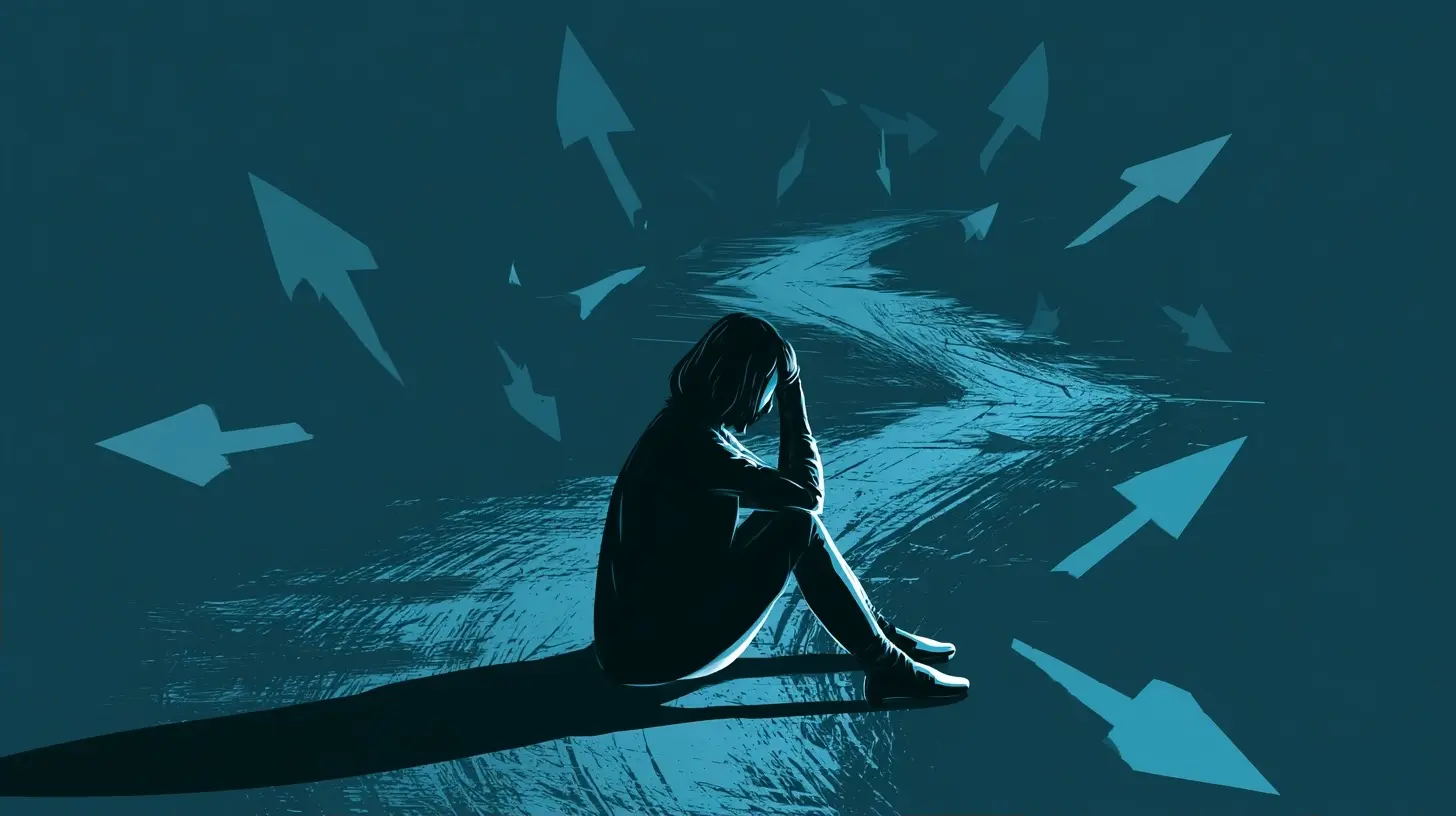
To understand why this happens, you have to understand what a decision actually is from the brain's perspective.A decision is a commitment under uncertainty. You have to weigh options, predict outcomes, accept the risk of being wrong, and then close off alternatives. That last part is the expensive one. Choosing one thing means giving up others, and the brain is wired to notice what it is losing.
The Hidden Tax of Open Loops
Unmade decisions do not disappear. They stay open, and open loops consume background attention. This is why you can feel tired at the end of a day in which you did very little visible work. You spent the day holding options open.A person with twelve unresolved decisions is not just facing twelve future choices. They are carrying twelve active cognitive loads. Each one nudges attention away from the task in front of them. The result looks like distraction. It is actually unresolved decision pressure.
Ego Depletion and Its Critics
The classic explanation for this phenomenon is ego depletion, the idea that self-control is a finite resource that gets used up. That model has been debated heavily in recent years, and some replication attempts have produced weaker effects than originally reported. It would be dishonest to present it as settled science.What remains well-supported is the practical observation: people do make worse decisions and avoid decisions more as they make more of them, especially under stress, time pressure, and ambiguity. Whether the underlying cause is glucose, motivation, attention, or something else, the behavioral pattern is real and reproducible in daily life. You do not need a settled theory to benefit from managing the load.
How Decision Fatigue Turns Into Procrastination
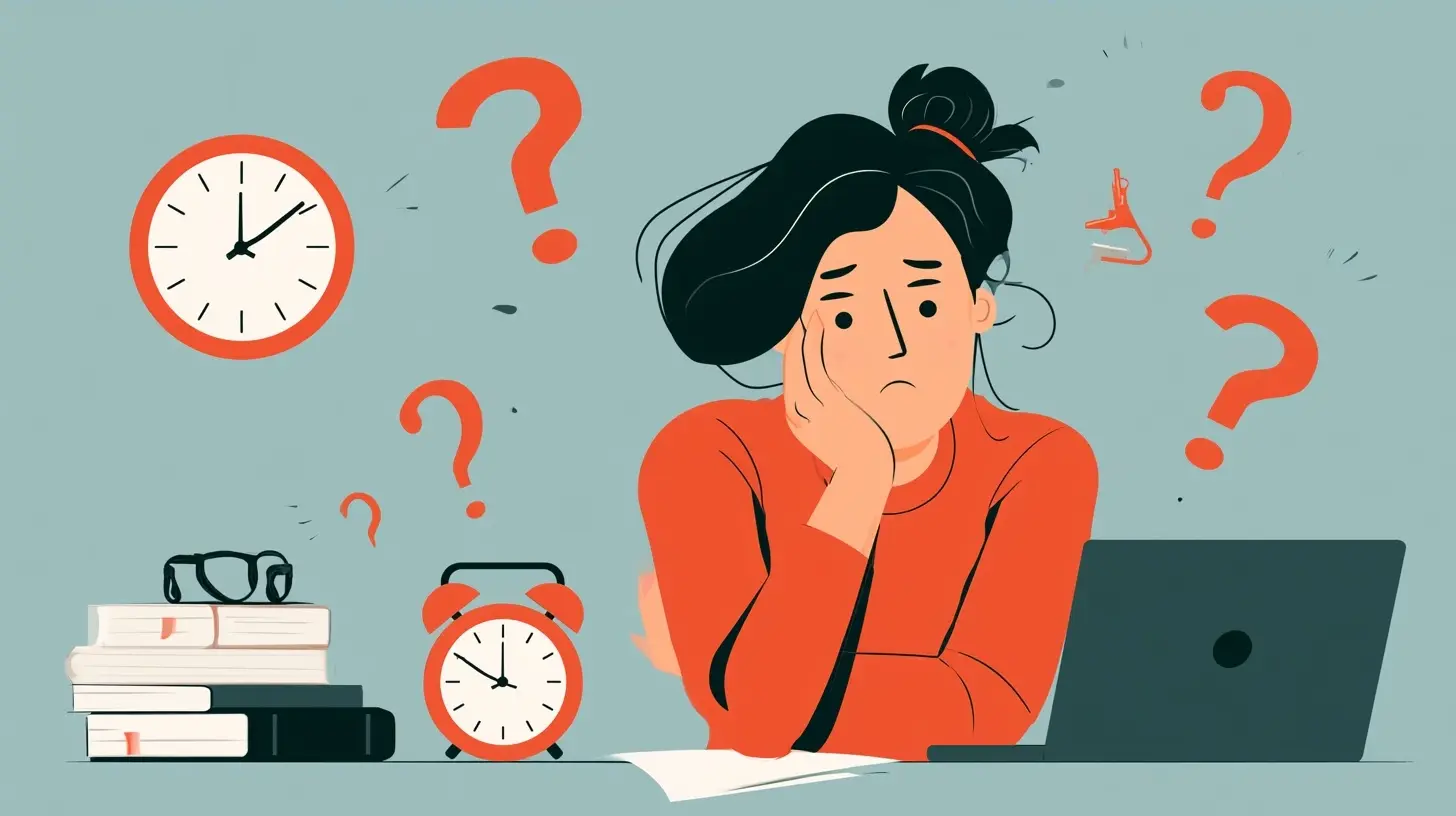
The transition from fatigue to delay follows a fairly predictable sequence. Recognizing it in yourself is the first practical skill.Stage 1: Choice Overload
You face more options than you can comfortably evaluate. This happens at work when a project has no clear priority, at home when a meal plan has too many possibilities, and online when a search returns two hundred results.Stage 2: Evaluation Breakdown
You start comparing options on inconsistent criteria. You weigh one option on cost, another on speed, another on how it will look to your boss. The comparison stops being rational and becomes emotional.Stage 3: Avoidance as Relief
You step away. The relief is immediate, which is exactly why the pattern reinforces itself. Avoidance works in the short term, and the brain learns to reach for it.Stage 4: Guilt and Re-engagement Cost
Later, guilt arrives. Now you have to overcome both the original decision and the emotional weight of having avoided it. The barrier is higher than it was at the start. This is the point where people conclude they are lazy. They are not. They are paying interest on a decision they deferred.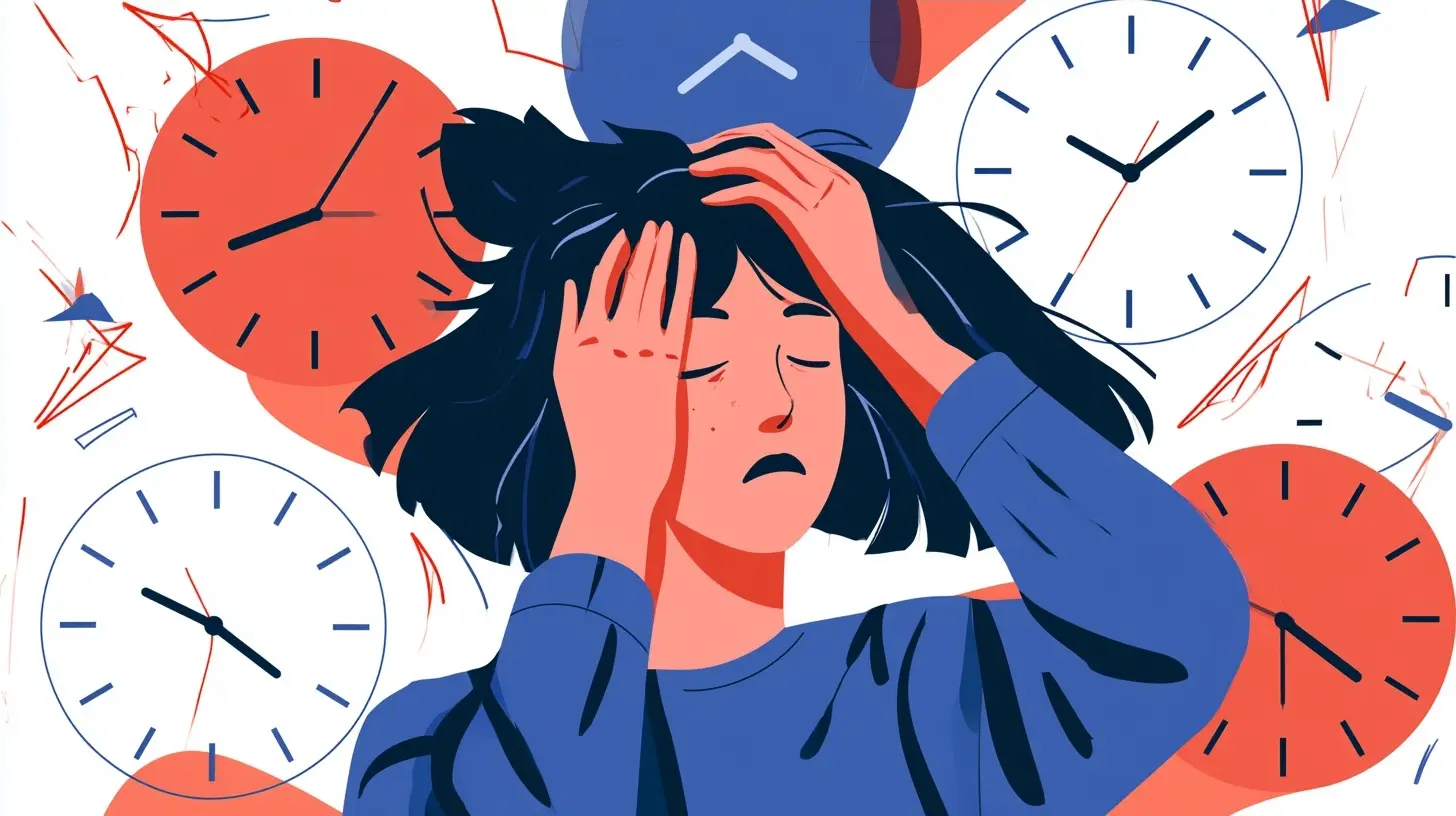
The Real-World Cost of Untreated Decision Fatigue
It helps to see the pattern in concrete settings, because abstract explanations rarely change behavior.At Work
A product team spends three weeks debating a feature name and two days building the feature. The delay was not caused by lack of skill. It was caused by a decision that no one had authority to close. Every meeting reopened it, and each reopening drained the team's capacity to decide anything else.In Creative Work
A writer with a clear assignment and no clear angle will often clean the entire house before starting. The cleaning is not the problem. The problem is that the angle is an unmade decision, and the brain will accept almost any substitute activity to avoid it.In Personal Life
A couple who cannot decide where to spend the holidays will argue about small things for weeks. The arguments are not about the small things. They are symptoms of a large decision that neither person wants to own.In Health and Finance
Delaying a medical appointment or an investment decision often looks like apathy. In practice, it is usually the result of too many variables with no framework for weighing them. When the framework is missing, the decision gets postponed indefinitely.Why "Just Do It" Advice Fails
The standard advice for procrastination is to push harder, use more discipline, and stop overthinking. This advice fails for a specific reason: it treats the problem as motivational when it is structural.If you are decision-fatigued, willpower is the resource you have least of. Asking yourself to summon more of it is like asking a person with an empty tank to drive faster. The instruction is clear, the capacity is not there.
What works instead is reducing the number of decisions required, pre-committing to choices in advance, and building systems that make the default option the correct one.
Practical Strategies That Actually Reduce Decision Load
The following approaches are not motivational tricks. They are structural changes to how decisions get made. Used together, they reduce the total load enough that delay becomes less attractive than action.1. Decide Once, Then Automate
The single most effective intervention is to convert recurring decisions into rules. What you eat for breakfast, when you exercise, what you wear to work, which days you check email in blocks. Each rule removes a decision from the daily queue.This works because it exploits a simple asymmetry: one decision made calmly in advance replaces dozens of decisions made under fatigue. The trade-off is reduced flexibility. If your life changes frequently, rigid rules can become frustrating. A useful middle path is to set a default and allow a limited number of exceptions per week.
2. Schedule Decisions, Not Just Tasks
Most calendars hold tasks. Very few hold decisions. Adding a block called "choose project scope" or "pick vendor" changes the nature of the work. It gives the decision a time and a place, which closes the open loop.This works because open loops drain attention until they are either resolved or scheduled. Scheduling is not the same as resolving, but it does quiet the background noise.
3. Front-Load Important Choices
Your capacity for hard decisions is generally highest early in your day, whatever "early" means for your schedule. Use that window for the choices that matter most. Save low-stakes decisions for later.The trade-off is that this requires knowing which decisions are actually high-stakes. Many people misclassify. A useful test: if you would still care about this choice in a year, it belongs in your best window.
4. Cap the Options
Three options is usually enough. Five is the practical maximum for most people. Beyond that, evaluation quality drops faster than the value of the additional choices rises.This is why good restaurants have short menus and good managers present two or three proposals rather than ten. Constraint is not a limitation here. It is a feature.
5. Use Reversible and Irreversible as Your First Filter
Before evaluating a decision in detail, ask whether it can be undone. Reversible decisions should be made quickly. Irreversible ones deserve time.Most people invert this. They agonize over reversible choices like which software tool to trial and rush irreversible ones like signing a long lease. Correcting the inversion frees up a surprising amount of capacity.
6. Build Defaults That Favor Action
When you cannot decide, what happens by default? If the default is inaction, delay becomes the path of least resistance. If the default is a specific next step, momentum is preserved.For example, a writer who cannot decide on the opening paragraph can default to writing a rough version and marking it for revision. The default is not "wait for clarity." It is "produce something imperfect and fix it later."
7. Separate Deciding From Doing
Mixing the two is one of the most common mistakes. When you sit down to work and simultaneously try to decide what to work on, you are asking your brain to do two demanding jobs at once. The result is usually neither.Decide first, in a separate session. Then execute. The execution session should require almost no decisions.
Common Mistakes and Misconceptions
Mistake 1: Treating All Decisions as Equal
Not every choice deserves deliberation. A useful habit is to sort decisions into three buckets: trivial, meaningful, and consequential. Trivial decisions get a rule or a coin flip. Meaningful ones get a short framework. Consequential ones get real time and, ideally, another person's input.Mistake 2: Confusing Busyness With Progress
A day full of small decisions feels productive and leaves you unable to make a big one. This is a bad trade. Guard your capacity for the choices that move things forward.Mistake 3: Believing More Information Will Resolve the Delay
Past a certain point, more information does not improve the decision. It postpones it. The signal that you have enough information is usually that additional input no longer changes your ranking of the options. When that happens, decide.Misconception: Decision Fatigue Is Just Laziness
Laziness implies a preference for ease over effort. Decision fatigue is a depletion of a specific capacity. The behaviors look similar from the outside and are completely different from the inside. Treating one as the other leads to shame, and shame makes delay worse.Misconception: Rest Alone Fixes It
Rest helps, but if you return to the same decision-heavy environment, you will be depleted again by the same time tomorrow. The fix is not just recovery. It is redesign.
When to Push Through and When to Step Back
There is no universal rule here, and pretending otherwise would be dishonest.Push through when the decision is reversible, low-stakes, and blocking other people. In these cases, the cost of a wrong choice is smaller than the cost of delay.
Step back when the decision is irreversible, high-stakes, or emotionally loaded. In these cases, forcing a choice under fatigue tends to produce regret and rework.
A useful heuristic: if you have revisited the same decision more than three times without new information, you are not deciding. You are avoiding. At that point, either lower the stakes by making the decision reversible, or hand it to someone with fresh capacity.
Building a Personal System That Prevents the Pattern
The goal is not to eliminate decision fatigue. That is not possible. The goal is to make sure your most important decisions are not the ones that get postponed.A simple system has three parts. First, a daily window for high-stakes decisions, protected from interruption. Second, a set of rules and defaults that handle recurring low-stakes choices automatically. Third, a weekly review where you identify any decision that has been open too long and either close it, delegate it, or schedule it.
This system works because it matches the structure of the problem. Decision fatigue is a load problem. The solution is load management, not more effort.
The Bottom Line
Your delays are often not a sign that you do not care. They are a sign that you have been asked to make too many decisions with too little structure. The task in front of you is rarely the hard part. The hard part is the unmade choice hiding inside it.Close the choice, and the task tends to move. Not always easily, and not always immediately. But the resistance that felt like a character flaw usually turns out to be a queue that needed clearing.
all images in this post were generated using AI tools
Category:
Procrastination SolutionsAuthor:

Jenna Richardson
Discussion
rate this article
1 comments
Ardent Lozano
This article really hits home. I often find myself procrastinating over choices, big or small, and I never realized how decision fatigue plays a role. It's a gentle reminder that sometimes, less is more when it comes to making choices.
October 7, 2026 at 4:42 AM