Mental Health and Creativity: Fostering Innovation Through Wellbeing
27 November 2026
There is a stubborn cultural myth that suffering fuels art. We see it in the tortured poet, the erratic painter, the sleepless entrepreneur. The story is romantic, and it is also misleading. While distress can sometimes produce striking work, it is a terrible long-term strategy for creative output. The research and lived experience point in a different direction: wellbeing is not the enemy of innovation. It is the soil in which innovation grows.
This article examines the relationship between mental health and creativity with care. It avoids the simplistic claim that you must choose between feeling good and making great things. Instead, it looks at how psychological states shape creative thinking, why the "tortured genius" narrative persists, and what individuals and organizations can do to build sustainable creative lives.
Why the Tortured Artist Myth Persists
The myth survives partly because of selection bias. We remember the artists who struggled publicly and produced extraordinary work. We do not remember the vast number who struggled and produced little, or who produced brilliantly but died young. History filters for drama.There is also a grain of truth that keeps the myth alive. Certain mood states can temporarily alter thinking. Mild elevations in mood, for instance, are sometimes associated with faster idea generation and looser associations between concepts. But this is a narrow window, and it comes with real costs. The same loosening of associations that helps generate unusual ideas can make it harder to evaluate, refine, and finish them.
The myth is also convenient for institutions. If creativity requires suffering, then organizations have no obligation to protect the wellbeing of creative people. The myth becomes an excuse for exploitation.
How Mental Health Actually Shapes Creative Thinking
Creativity is not a single act. It is a cycle that includes preparation, incubation, illumination, and verification. Different psychological states support different phases of that cycle.The Preparation Phase
This is where you gather information, define the problem, and build skills. It demands focus, persistence, and tolerance for boredom. Anxiety and depression both interfere here. Anxiety fragments attention and makes it hard to stay with a problem. Depression saps the motivation required to do the unglamorous groundwork.The Incubation Phase
This is the quiet period when ideas churn below awareness. Good incubation requires a certain kind of mental rest. A mind that is constantly vigilant, ruminating, or flooded with stress hormones has less capacity for this background processing. Sleep matters enormously here, and poor mental health often disrupts sleep. This is one of the clearest mechanisms linking wellbeing to creative output.The Illumination Phase
This is the moment of insight. It tends to arrive when the mind is relaxed and associative rather than tightly controlled. Positive affect broadens attention and encourages playful connection-making. This is well documented in psychology: positive moods tend to widen the scope of attention, which supports divergent thinking.The Verification Phase
This is where most creative work is actually finished. It requires critical judgment, patience, and the ability to tolerate feedback and failure. Depression makes self-criticism harsh and inflexible. Anxiety makes feedback feel like threat. Neither state supports the disciplined editing that turns a promising idea into something real.The practical takeaway is that mental health does not simply make you feel better while you create. It supports specific cognitive functions at specific stages. When wellbeing erodes, the damage is not uniform. It tends to hit the phases that require patience and persistence hardest.
The Bidirectional Relationship
It would be inaccurate to say that poor mental health always reduces creativity. The relationship runs both ways and is more complicated than a simple cause and effect.Creativity can support mental health. Making things, solving problems, and expressing yourself can provide meaning, structure, and a sense of agency. Creative work offers a channel for difficult emotions and a way to connect with others. For many people, creative practice is a genuine part of their wellbeing routine.
Mental health can also constrain creativity. When you are depleted, your working memory is smaller, your tolerance for ambiguity is lower, and your ability to recover from setbacks is weaker. These are precisely the capacities creativity demands.
And creativity can strain mental health. Creative work involves uncertainty, exposure, and rejection. Freelancers face financial precarity. Artists face public criticism. Innovators face failure after failure. The conditions of creative work can be psychologically demanding even for people who start out healthy.
This is why the conversation needs to move past "does creativity require suffering" toward a more useful question: what conditions allow people to do demanding creative work without breaking down?
What Wellbeing Actually Means in This Context
Wellbeing is not the same as constant happiness. That is a common misconception, and it is worth correcting because it leads people to chase the wrong goals.Wellbeing, in the psychological sense, includes several components. It includes emotional regulation, which is the ability to experience difficult feelings without being overwhelmed by them. It includes a sense of purpose and meaning. It includes satisfying relationships. It includes a reasonable degree of autonomy and control over your work. It includes physical health, especially sleep.
None of these require you to feel good all the time. A person can be going through a hard period and still have the foundations that support creative work. The goal is not the absence of struggle. It is the presence of enough stability and support to keep functioning and recovering.
Practical Strategies for Individuals
The advice below is not a substitute for professional care. If you are struggling significantly, seek help from a qualified clinician. What follows are practices that support creative sustainability for people who are broadly functioning but want to protect their mental health.Protect Sleep Before You Protect Productivity
Sleep is the single most underrated creative resource. It consolidates memory, supports emotional regulation, and enables the associative processing that underlies insight. When deadlines press, sleep is usually the first thing sacrificed. This is a bad trade. The short-term gain in hours is usually offset by a larger loss in quality and judgment.Consider a simple rule: treat your sleep window as a fixed commitment, not a variable. If a project requires more hours, take them from elsewhere.
Separate Generation From Evaluation
Many creative people get stuck because they judge ideas while generating them. This is a recipe for anxiety and blockage. The fix is structural: create explicit phases where evaluation is banned.Write the rough draft without editing. Brainstorm without assessing. Then, in a separate session, put on the critic's hat. This separation reduces the emotional load of the work and makes both phases more effective.
Build a Recovery Rhythm, Not Just a Work Rhythm
Creative work is cyclical. It draws on reserves and needs refilling. Many people plan their work meticulously and leave recovery to chance. Reverse that. Schedule recovery with the same seriousness you schedule work.Recovery does not have to mean vacation. It can mean walks, hobbies with no output, time with people who do not care about your work, and periods of deliberate input rather than output.
Reframe Self-Criticism
Harsh self-criticism feels like rigor, but it usually undermines the work. It narrows attention to flaws and suppresses the willingness to take risks. A more useful stance is curiosity. Instead of asking "is this good," ask "what is this trying to be" and "what would make it clearer."This is not about lowering standards. It is about separating the standard from the emotional tone. You can hold high standards without attacking yourself.
Use External Structure to Reduce Internal Load
Uncertainty is a major source of creative anxiety. You can reduce it with structure. Set clear daily targets. Use checklists. Define what "done" means for each session. External structure reduces the number of decisions you have to make and the amount of ambiguity your mind has to hold.This is especially useful for people prone to rumination, because it gives the mind a concrete task to return to.
Know the Difference Between Productive Discomfort and Warning Signs
All creative work involves discomfort. The discomfort of a hard problem is normal. The discomfort of genuine depression or an anxiety disorder is different. Signs to watch for include persistent loss of interest, significant sleep changes, withdrawal from people, and a sense that nothing matters. These are not creative phases. They are signals to get support.
What Organizations and Leaders Can Do
Individual strategies matter, but they are not enough. Creative work happens in contexts, and those contexts can either support or undermine mental health.Stop Rewarding Heroics
Many workplaces celebrate the all-nighter, the weekend push, the person who never logs off. These celebrations teach people that their wellbeing is expendable. Over time, they produce burnout and turnover, which are far more costly than the hours saved.Leaders can change this by recognizing sustainable output rather than visible sacrifice. Ask people how they are doing and mean it. Model reasonable hours yourself.
Reduce Unnecessary Uncertainty
Creative work is inherently uncertain. Organizations often add unnecessary uncertainty on top of it: shifting priorities, unclear roles, and vague feedback. Each of these consumes mental bandwidth that could go into the work.Clear goals, stable priorities, and honest communication reduce the psychological load. This does not make the work easy. It makes the work possible.
Normalize Help-Seeking
If the only time mental health is mentioned is during a crisis, people will hide their struggles until they cannot. Leaders can normalize the conversation by talking about mental health as a routine part of professional life, by providing access to support, and by responding well when people disclose difficulty.The response matters more than the policy. If someone discloses a struggle and is treated with suspicion, no amount of messaging will undo that lesson.
Design for Focus
Open offices, constant notifications, and meeting-heavy calendars fragment attention. Fragmented attention is bad for creative work and bad for mental health. Both suffer from the same conditions.Protected blocks of time, clear communication norms, and fewer interruptions are investments in both wellbeing and output.
Common Mistakes and Misconceptions
A few patterns come up again and again.The first is treating self-care as a substitute for structural change. Meditation and exercise are useful. They do not fix a job that demands seventy hours a week. Individual practices cannot compensate for a context that is genuinely harmful.
The second is assuming that creative people are naturally fragile. Some are. Many are not. Treating all creative people as delicate can be patronizing and can discourage people from seeking the support they actually need.
The third is using mental health language to avoid accountability. This is rare but real. Most people who struggle are not using it as an excuse. Leaders should respond to genuine difficulty with support and to performance issues with clarity. These are not in conflict.
The fourth is waiting for crisis. Most mental health support happens too late. The more useful approach is to build routines, relationships, and structures that make crises less likely in the first place.
A Balanced View
There is a version of this conversation that becomes another pressure: now you must be well in order to be creative. That is not the point. The point is that wellbeing is not a luxury or a distraction from the work. It is part of the infrastructure that makes the work sustainable.Some of the most creative people in history struggled deeply. That is true, and it deserves compassion, not romanticization. The question is not whether struggle can coexist with creativity. It clearly can. The question is whether we should build our lives and institutions around the assumption that it must.
We should not. The evidence and experience point toward a better approach: protect the foundations, build sustainable rhythms, and treat mental health as part of the creative process rather than its opposite. Innovation does not require suffering. It requires enough stability to take risks, enough rest to see connections, and enough support to keep going when the work gets hard.
That is a more demanding standard than the myth. It is also a more humane one. And in the long run, it produces better work.
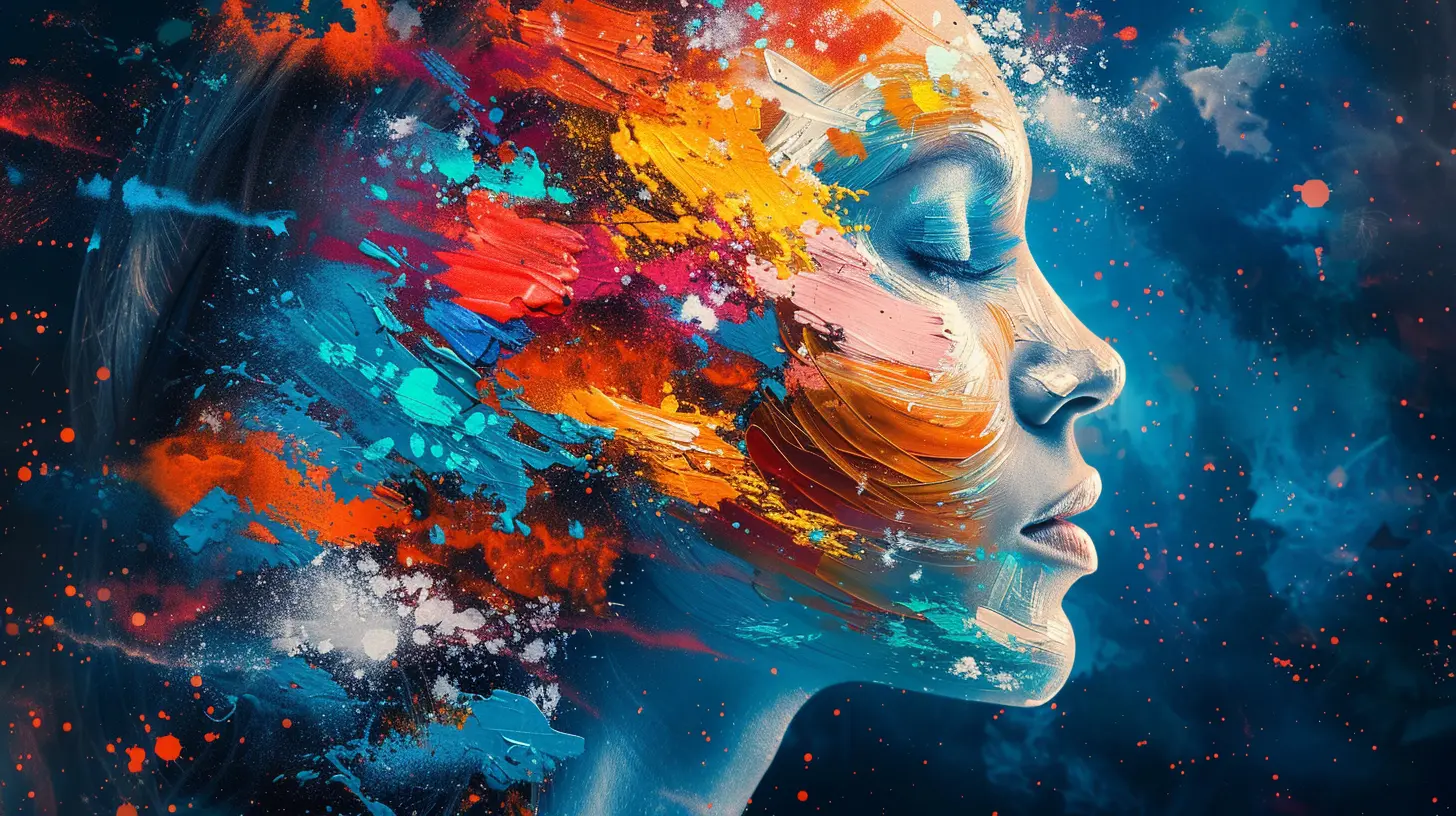
all images in this post were generated using AI tools
Category:
Creativity And The MindAuthor:

Jenna Richardson