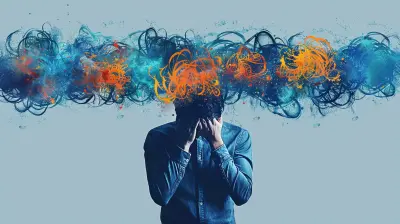
Empowering Yourself Through Emotional Self-Regulation
7 August 2026
Ever feel like your emotions are running the show? One moment you're calm, the next you're snapping at someone over spilled coffee—or worse, you're spiraling over things you can't control. We've all been there. Emotions are part of what makes us human, but when we don’t know how to manage them, they can wreck our peace, relationships, and even our health.
But guess what? You have more control than you think.
Emotional self-regulation isn’t about ignoring your feelings or pretending like everything’s okay when it’s not. It’s about learning to guide your emotional responses in a healthy, balanced way. Think of it as emotional strength training. So, grab that mental gym bag, and let’s work through how to empower yourself through emotional self-regulation.
What Is Emotional Self-Regulation Anyway?
Let’s keep it simple. Emotional self-regulation is your ability to manage your thoughts, feelings, and behaviors in a way that leads to positive outcomes. It helps you respond rather than react.Imagine this: you're stuck in traffic, running late, and someone cuts you off. Your immediate reaction might be to yell (even if they can’t hear you), slam the steering wheel, or stew in frustration. With self-regulation, instead of losing your cool, you might take a deep breath and think, “Okay, getting upset isn’t going to clear the traffic.”
Sounds easier said than done, right? Totally. But with practice, anyone can build this skill.
Why Emotional Self-Regulation Matters in Real Life
So, why should you care? Because it touches every part of your life.- Mental Health: Helps reduce anxiety, depression, and emotional burnout.
- Relationships: Better communication and fewer unnecessary arguments.
- Decision-Making: Clearer thinking under pressure.
- Productivity: Less time wasted being distracted by emotions.
Think of your emotions like a river. Without self-regulation, you’re just getting tossed around by the current. With it, you’re in the canoe, steering your way through even the choppy parts.
The Science Behind Emotional Self-Regulation
Let’s nerd out for a second (but just a little). Emotional self-regulation is tied to executive functioning in the brain, especially the prefrontal cortex. That’s the part that helps with planning, decision-making, and impulse control.Meanwhile, the amygdala—your brain’s “alarm system”—loves to react. It triggers fight or flight when you’re under stress. Self-regulation is like turning down the volume on that internal alarm and letting your logical brain take the wheel.
Good news? Like a muscle, your brain can be trained. Cognitive-behavioral therapy (CBT) and mindfulness are two evidence-based practices that do just that.
Signs You Might Be Struggling With Self-Regulation
How do you know if emotional self-regulation isn’t your strong suit? Here are a few red flags:- You often overreact to minor inconveniences.
- You feel stuck in negative emotions for long periods.
- You've been told you're “too sensitive” or “short-tempered.”
- You avoid uncomfortable situations instead of facing them.
- You regret how you react in emotional situations.
If any of these hit home, don’t worry—it’s not about blame. It’s about awareness. And awareness is the first step toward change.
Habits That Strengthen Emotional Self-Regulation
Let’s get into the good stuff: real-world, practical tools you can use to build emotional resilience and take back control.1. Pause Before Reacting
When something triggers you, create space between stimulus and response. Even a two-second pause gives your brain a chance to shift gears.Try this mantra: “Pause. Breathe. Choose.”
It’s like hitting the clutch before changing gears on a stick shift. Helps you transition smoothly instead of stalling.
2. Label Your Emotions
“I feel bad” isn’t very helpful. Is it anger? Shame? Frustration? Naming the emotion reduces its power. It also activates the prefrontal cortex, which helps calm you down.A good rule of thumb: Name it to tame it.
3. Check the Story You're Telling Yourself
Emotions often follow thoughts. If you're thinking, “I’m terrible at this,” or “They must hate me,” your emotional response will match. Challenge those thoughts.Ask yourself: “Is this thought 100% true? Is there another way to interpret this?”
4. Practice Mindful Breathing
Simple but powerful. Deep breathing sends signals to your brain that you’re safe. Try box breathing: inhale for 4 seconds, hold for 4, exhale for 4, and hold again for 4.It’s like hitting the reset button on your nervous system.
5. Build Emotional Awareness Daily
Journaling, meditation, or even a quick check-in during the day keeps you connected to your inner world. The more you understand your emotional patterns, the easier they are to manage.Use prompts like:
- What am I feeling right now?
- What triggered this feeling?
- What do I need in this moment?
6. Set Boundaries
Often, emotional overload comes from saying “yes” too much or tolerating toxic behavior. Learning to say “no” respectfully is a form of self-regulation too.Remind yourself: Boundaries aren’t walls—they’re bridges to healthier interactions.
What It Looks Like in Daily Life
Here’s how emotional self-regulation might show up in your everyday moments:- You get a critical email and instead of firing back instantly, you take a walk and cool off.
- Your partner says something that hurts, but instead of yelling, you say, “Hey, let’s talk about how that made me feel.”
- Your kid throws a tantrum in public, and instead of panicking or scolding, you stay calm and guide them through it.
These don’t make you a robot—they make you emotionally intelligent. And that’s something people notice and respect.
Myths About Emotional Self-Regulation
Let’s bust a few myths while we’re at it:- Myth #1: It means suppressing emotions.
- Nope. It’s about recognizing emotions and choosing your response, not burying them.
- Myth #2: You're born with it or you're not.
- Wrong again. It’s a skill. One you can build with practice.
- Myth #3: Strong emotions are always bad.
- Not at all. Emotions are messengers. They tell you what matters. Regulation is how you deliver the message effectively.
How to Handle Emotional Triggers Like a Pro
Triggers happen. The trick isn’t avoiding them—it’s handling them better.Here’s a simple framework:
1. Notice the trigger (e.g., “Okay, I’m feeling irritated…”)
2. Name the emotion (e.g., “This feels like rejection…”)
3. Normalize it (e.g., “It’s okay to feel this way, emotions are valid…”)
4. Navigate forward (e.g., “How can I respond in a way I’ll be proud of?”)
It takes practice, but this gets easier over time.
Emotional Self-Regulation in Relationships
Relationships are emotional minefields. From family to coworkers to romantic partners, emotions run high. That’s why self-regulation is like relationship insurance—it protects both parties.Instead of blaming or withdrawing when conflicts arise, you can:
- Use “I” statements (“I feel...” vs. “You always…”)
- Take timeouts when needed
- Reflect before reacting
- Apologize when you’ve messed up
This makes you not only a better partner or friend but also someone who’s safe to be around emotionally.
Teaching Emotional Self-Regulation to Others
Want to pass it on? Whether you’re a parent, friend, or leader, modeling self-regulation teaches others to do the same.You don’t have to be perfect. In fact, showing how you manage your emotions in real time is a powerful lesson. "I'm feeling overwhelmed, so I'm going to take a break and breathe before we continue" teaches more than any lecture ever could.
Final Thoughts: Empowerment Starts Within
At the end of the day, emotional self-regulation is about reclaiming your power. You’re no longer a puppet of your feelings. You become the author of your responses.And that kind of emotional maturity? It radiates. People feel safer around you. You trust yourself more. You stop sweating the small stuff—and even the big stuff becomes a little more manageable.
So next time emotions start to bubble up, pause. Breathe. Remind yourself: You’ve got this.
Because empowerment doesn’t come from controlling the world—it comes from mastering your inner one.
all images in this post were generated using AI tools
Category:
Emotional SupportAuthor:

Jenna Richardson
Discussion
rate this article
1 comments
Layne McCaffrey
This article on emotional self-regulation really sparks my curiosity. It's fascinating how mastering our emotions can lead to empowerment. I wonder what practical techniques others have found most effective in their own journeys toward emotional balance...
August 14, 2026 at 3:55 AM
Jenna Richardson
I'm glad you found it intriguing! Practicing mindfulness and journaling are great techniques many have found helpful. What about you?